Diary
of
3/469 Cpl
Thomas Ernest Hutchinson
( Medic )
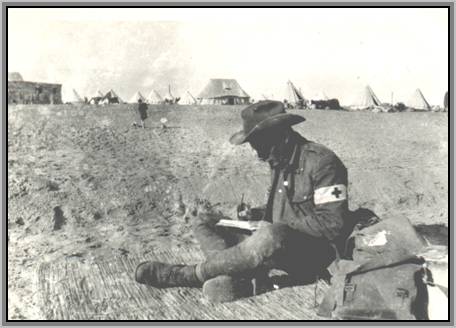
1914 / 1915
NOTES
This diary measures 12cm x 9cm (size of the palm of my hand – see
copy at back), with
four days per opening.
Mostly written in pencil, which has become rather blurry in places.
Some Turkish sayings are translated at back of diary.
I have also included a glossary at the back, with
explanations of some terms underlined during the diary.
Below are some relevant dates in Grandpa’s life, which may put some
perspective on the events in the diary:
11/11/1888 Born – Wolverhampton, England
14/11/1908 Emigrated to NZ
8/10/1913
Married to Lilian Foreman (1st marriage)
22/9/1914
Daughter Elsie born
14/12/1914
Departed NZ on overseas service
1918
Returned to NZ
26/3/1921
Daughter Lola born
1941
Divorced Lil, married Irene Hudspith (2nd
marriage). 6 daughters and 2
sons.
July 1975
Died, aged 86 years.
Buried in Kaikohe, NZ
Record of Services in the
New Zealand Expeditionary Forces
Copy of certificate at back of book
Date Commenced Duty 25/11/14
Date Finally Discharged
13/12/18
Service
- In New Zealand
- years
71 days
- Overseas
3 years
313 days
TOTAL SERVICE
4 years
19 days
Diary transcribed in 2002 by
Ngaire McGregor (daughter from second marriage)
and
Wendy Cadigan (grand-daughter)


They shall not grow old,
As we that are left grow old;
Age shall not weary them,
Nor the years condemn.
At the going down of the sun
And in the morning
We will remember them.

November 1914
|
7th |
Received orders to proceed to Trentham.
|
|
11th |
Broke up home and left Taumaranui.
Sent Lil to Auckland by morning train.
|
|
12th |
Arrived Trentham. |
December 1914
|
4th |
Went to Auckland on leave.
Found Lil looking thin.
Baby had made great progress.
Had a very enjoyable time and felt more reconciled to
going.
|
|
7th |
Returned to Trentham.
|
|
12th |
Reveille at 4am.
Packed gear and left camp 9am for Lanboon(?).
Marched to transports.
Put on Verdala.
George on Willochria.
Paraded at 2pm and all troops marched to Newton Park.
Inspected by Governor Lord Liverpool.
Speeches by his Ex Massey.
J. Allen and Luke.
Marched straight back.
Very dry.
No hope.
On to transports 5.30pm.
Left wharf and anchored out at 6.30.
No chance of getting ashore.
Wellington not up to Auckland.
Rather shoddy send off.
French succeeded in being put back for next lot.
Powerful stink of horses.
Hope it will go down aft when we get on the move.
Wind blowing like a son of a gun.
|
|
13th |
Had a rotten time with indigestion last night and stayed in
the bunk nearly all day.
Had nothing to eat until teatime so as to starve it
out. No sign of
leaving yet.
Weather very dirty.
Rumoured that we don’t go until the weather clears.
Had a letter from Lil dated 9th.
Very slow about coming.
Wonder if I’ll get any more before we go.
|
|
14th |
Up anchor at 5.30 and away.
Psyche in the lead, then Willochria,
Verdala and Knight of the Garter.
Lovely blue sky, but sea trifle rough.
Many collapsed.
|
|
15th |
Puku very sorry.
|
|
16th |
All right now.
Very rough night.
Three horses died.
500 aboard.
Willochria and Psyche gone ahead, now
out of sight.
Weather getting rougher.
Knight of the Garter having a bad time of it.
Sticking her nose into it like a pig and her
propeller is out of water half the time.
The Verdala appears to be the best sea boat of
the three. The
sea is getting rougher all the time, but very few are sick
now. The
Willochria has 1200 sick out of 1400.
|
|
17th |
Psyche
left us to our own devices. |
|
|
|
|
18th |
Verdala
left Willochria to look after the Knight and
is hurrying to Hobart, as our refrigerator is out of order.
Nearly everyone over the seasickness now.
Wind has died down and the sea is moderating fast.
Spent an hour in the engine room.
Wrote to Lil, Will and French.
Ambulance put on.
Scrubbing paintwork.
Good practise for First Aid, I don’t think!
|
|
20th |
Berthed at Ocean Pier, Hobart 8am.
Route march in afternoon.
Very enjoyable.
Men marched well.
In evening, were allowed on wharf.
Went along to Willochria and found George
Miller in hospital, just recovering from measles.
|
|
21st |
Leave granted to 50%.
Great rejoicing.
Route march in afternoon.
Vet decided he’d like a swim, so jumped off the bow
and refused to be rescued.
|
|
22nd |
Dull day for a change.
Route march in afternoon.
On pass in evening.
Went out with Winks.
Had dinner in the “Grotto”.
Prettily decorated place, but the feed was not worth
2|- Bought a
bag of fruit and some cigarettes and had a ride to Newport
on top of the car, smoking and eating cherries and apricots.
Returned on same car.
Pretty ride.
Strawberries and cream and a gentle stroll around.
Ham and egg for supper, preceded by a welcome hot
bath. On board
at 10pm and sat on bows for a couple of hours yarning with
Thompson.
|
|
23rd |
Left Hobart 10am.
Good send off.
“Tipperary”.
Had a good run.
Hobart rather disappointing.
Some good buildings there but the majority were small
and old. Some
lovely houses and gorgeous gardens in suburbs.
Pink geraniums grown in heaps seem to be popular.
Comical little inns.
Town rather sleepy.
Not to be compared with Auckland.
Skirted south coast.
Very rough.
Innumerable small rocky islets dotted along coast.
Lovely weather, by way of a change.
|
|
24th |
Fine weather, and smooth sea continues.
Had physical drill and signalling in morning,
followed by orgy of letter writing.
N.Z.M.C.
(NZ Medical Corps) were given a library in Hobart by
Red Cross Society there.
Band is busy practising on boat deck.
Fairly decent concert in evening. |
|
|
|
|
25th
Xmas Day |
Raining in morning, but cleared off for afternoon.
Big spreads.
Meat, tinned fruit, cake and lollies for lunch.
Apples distributed in afternoon.
Spent afternoon writing letters.
Fair dinner.
Soup, fowl and plum pudding.
Bit of a concert in evening, but only stayed for two
items.
|
|
26th |
Three whales alongside boat for some time.
|
|
28th |
Saw flying fish.
Sighted Australian coast about 6pm, and anchored
outside Albany 9pm.
Twelve Australian transports already there.
|
|
29th |
Moved into wharf and in evening pulled out and anchored in
inner harbour.
No one allowed ashore.
|
|
30th |
Censorships established.
|
|
31st |
Left Albany 9am.
All boats lifted anchor together and slowly steamed
into line. One
towing submarine AE2.
Now steaming in two lines.
Leading boats and hull down on the horizon.
It is a great sight to see the 15 boats.
It has been very hot today.
No breeze worth mentioning.
And only a gentle swell.
Sea deepest of blue.
Last day of 1914.
Little thought last New Years Eve, that twelve months
later would bring such changes.
Elsie born and I am on the high seas, en route for
the front.
Wonder what next year will bring? |
January 1915
|
Friday 1st
(Bank Holiday) |
Celebrated the New Year by having few extras for meals.
No parade in afternoon.
Played bridge.
Saw several flying fish.
Another horse died.
Two from other boats floated by.
|
|
Saturday 2nd |
Two more boats joined in the fleet, making total of 17.
Put on the strength of expeditionary force.
Simmons applied, but failed.
Getting very hot and all hands sleeping on deck.
Shower baths having a great hearing.
|
|
Sunday 3rd |
Very hot.
Nothing doing.
Some flying fish about.
|
|
Monday 4th |
Nothing doing.
|
|
Tuesday 5th |
Nothing doing.
|
|
Wednesday 6th |
Nothing doing.
|
|
Thursday 7th |
Last few days very monotonous and hot.
Plenty of bridge and shower baths.
Nothing else of interest. |
|
Friday 8th |
Very close all day.
All boats stopped at 4pm for half an hour.
Reason not made known.
At night heavy rain. Stampede of those sleeping on
deck and not under shelter of the awnings.
|
|
Saturday 9th |
Heavy rain. Air
much cooler in consequence.
Lecture on physiology by Sgt Emmet.
Disastrous affair.
He made many mistakes – clavicle vertebrae, pariental
bone etc.
|
|
Sunday 10th |
On hospital duty for first time.
Trooper Malcolm Campbell, Otago
M.R.
died in afternoon of pneumonia.
Buried overboard 8pm.
Verdala moved out of line.
All boats stopped whilst ceremony was performed.
|
|
Monday 11th |
Another horse died, making 4.
Bosun on one of Australian boats died.
Fleet pulled up and troops paraded at 6pm for burial.
Slept on deck first part of night.
Rain came down.
Woke too late.
Blankets soaking wet.
Came below and dropped wet blankets on Cpl Genast who
was sleeping on the floor.
Great commotion.
|
|
Tuesday 12th |
(nothing written)
|
|
Wednesday 13th |
Sworn in for Ex Force.
Sighted Colombo in early morning. High hills.
Coast very flat.
Came to moorings inside breakwater about 9pm.
Coolies not allowed to sell us fruit.
Loud complaints from troops but no results so far. In
evening coolies brought fruit in boats.
Mainly coconuts.
At dark boats gathered round quietly and many climbed
over by ropes and had the night ashore, returning about 2am.
In afternoon, some had a swim.
Was just about to flop in when officers stopped it
and took names of those already in.
|
|
Thursday 14th |
Many of the Australian troops went ashore by crawling down
the housing pipes and down the anchor chains and into boats
waiting under the bow, so a crowd on Verdala did
likewise. They
had a very short gallop ashore.
Picket rounded all hands up and sent them back, and
boat moved out into the open.
Men are very discontented with their treatment, being
men and not kids.
Several still missing at roll call in afternoon.
Most brought out in a small steamer in evening.
|
|
Friday 15th |
More holidaymakers brought out, but still some missing.
Got underway about 8am.
Men who took leave hauled up and fined
£2
and 14 days CB
(Confined to Barracks).
Loud grumblings and threats about what will happen
when we get to the firing line.
About 80 fined altogether on Verdala.
Apparently Cpl Bowler left Major Levin no choice in
the matter.
|
|
Saturday 16th |
980 in the shade.
|
|
Sunday 17th |
840.
Pleasant breeze today for a change.
Much cooler and pleasanter altogether.
Church parade in morning.
Couldn’t hear a word.
|
|
Monday 18th |
Very calm day, but cool.
Canteen sold out of nearly everything, but Salmond,
Thompson and I had supper of apricots, dates and chocolate.
Butler joined later and for half the night we argued
the point about life after death etc.
B. an atheist.
|
|
Tuesday 19th |
Visited dentist and had two teeth extracted.
Marching order parade in afternoon.
Big feed of dates and chocolate for supper.
|
|
Wednesday 20th |
Mounted Rifles busy with grindstones, sharpening their
bayonets.
Things are beginning to look a bit more like business.
All boats stopped again whilst Themistocles
buried another man.
She must have an epidemic aboard.
In evening had a big discussion on socialism and
state ownership with Salmond, Thompson and Butler.
Quartet rapidly degenerating into a debating society.
|
|
Thursday 21st |
Nothing doing.
|
|
Friday 22nd |
Themistocles
buried another man.
|
|
Saturday 23rd |
Arrived at Aden about 8am and anchored well outside.
Didn’t go in sight of the town.
In afternoon, boats came out with fruit and were
chased away from Verdala.
They sold all their fruit and came back with tobacco
and dates that no one else wanted.
Left Aden about 5pm.
Rain fell during the morning.
Passed Perin during the night.
|
|
Sunday 24th |
Passed Empress of Russia, rigged up and painted like
a cruiser. Fine
looking boat.
Church Parade in morning.
Later a horse died and was dumped.
Directly after dinner a man was buried off the
Ceramic.
Passed a big P&O Liner.
Passing barren looking islands all day.
Nearly all had a lighthouse.
Having a bit of talk in evening, usual gang.
Sgt Emmett made a nuisance of himself and got the
straight tip to push off.
Later on he got into trouble with some of the other
fellows.
|
|
Monday 25th |
Vaccinated.
Wireless news came through of an attempted German naval raid
in the North Sea.
The Bismarck sunk and two others seriously
damaged, so that attempt was a failure.
Less than 800 miles to go now.
Getting near to the end of the trip, and a good job
too.
|
|
Tuesday 26th |
Nothing much doing.
Played bridge most of the day.
|
|
Wednesday 27th |
Land again in the morning, which has been in sight since
then. Very
sandy, barren looking coast both sides Gulf of Suez. Very
high and precipitous mountains in the distance, Egyptian
side. Had
set of Lanches, Waltz and Sch……(?) in afternoon, followed by
a game of football.
Ball was a sack tied up.
A bit solid for bare feet, but we had a happy time
all the same.
Very cold sleeping on deck.
|
|
Thursday 28th |
Arrived Suez about 8am.
Lovely day.
Cool morning.
Boat came alongside with fruit etc – oranges, figs
and dates, cigarettes etc.
Bought figs but never no more.
Also cigarettes and Turkish Delight.
Sea quite smooth and lovely pale blue.
Town shown up in high lights and shadows in the
distance all round.
Desert light brown and shimmery.
Hardly possible to see where earth met sky.
Lay at anchor all day.
Rumours of sniping along the canal, so barricade
built on bridge of all boats of bales of hay.
|
|
Friday 29th |
Left Willochria at Suez.
Staff boarded at 3.
Left Suez and entered canal about 8 or 9.
Soon came up with lines of trenches and redoubts on
starboard side, by Indian troops.
Great cheering.
Little later passed parties of NZ main body.
Haka and enquiries for mates.
They too were trenching and fortifying, but on port
side. At
entrance to canal passed HMS Ocean.
Later, Armed Merchantman Himalaya painted grey
and brown patches to match desert.
HMS Minerva painted ditto.
Both were moored at 3pm. Anchored in first Bitter
Lake was a French cruiser.
Looked odd with …
|
|
Saturday 30th |
Left anchorage about 9am.
Passed many camps.
Saw North Auckland boys.
Picked Ben Cox, almost certain.
Saw French gun post and two British (one
Swiftsure, other Clio).
Boys threw tobacco to the Ghurkhas.
Great fun.
Shouted from shore that scrap last Thursday took 300
Turks, 15 German officers, prisoners.
Very dreary country as far as the eye could reach.
Green patch at Ismalia.
Arrived Port Said about 6.30pm.
Just dark.
Very pretty with lights everywhere.
HMS Porcupine stationed at entrance to canal.
Great enthusiasm and interchange of cheers with Australian
boats. Cold
nights now.
|
|
Sunday 31st |
Bumboats alongside before daylight and allowed to trade.
Novel footwear here.
Parties with guitars etc came and gave a tune, mainly
ragtime. Caught
coins in inverted gamp.
Also conjurer.
Very good.
Oranges large and excellent.
Port Said appears to be a dirty hole.
Bumboat men well up in English curses.
Most of the Australian boats left in early morning.
Verdala left at noon.
Balconies filled with girls waving flags etc.
During morning Italian Man o’ War and British
destroyer came in.
French aquaplane flying around some hours finally
shot and passed our bow.
Great reception. |
February 1915
|
Monday 1st |
Arrived Alexandria 8 pm and anchored inside breakwater.
US Marina Massachusetts been here three months.
About 5pm moved in 1st landing stage.
Many Australians already gone to Cairo.
Signalled three dead through drinking native whiskey
(methylated spirits and wine).
Funny crowd on landing stage.
Two wee boys in spangles, to contortionists.
Little white girl, long hair and knickers, cadging
for coppers.
Darned shame.
Her mother there, no dress.
Plenty of scrapping and the police got in, great work
with their canes on the kids’ bums.
|
|
Tuesday 2nd |
Messed about all morning.
Disembarked eventually and left Alex about 1,
arriving Zeitoun 7pm.
Lot of humbug, no one knew what to do with us.
Finally drifted to our tents at 9pm.
Country between Cairo and Alexandria as flat as a pancake.
No fences.
All irrigated and apparently carrying a big
population.
Told to go in various tents by various non-coms, but fixed
up to suit myself.
Doull, J Thompson, Ibbotson, Ken Salmond, George
Portas and Lex Butler in tent, no non-com.
Hope we are not interfered with.
|
|
Wednesday 3rd |
Rotten breakfast.
More messing about.
Went and dug up George.
Soldiering agrees with him all right.
Had NZ mail.
Two letters from Lil, one from Jos and one each from
Mater and Eth, forwarded by Lil.
In afternoon George and I went to Heliopolis and had
a drink, then by car to Cairo.
Saw Kan Kan.
Had a drive, saw Nile Bridge, Khedives Palace, Lord
Cromer’s Palace, Khedives Mother’s Palace and sundry others.
Shepheards Hotel,
Simarionira Hotel etc.
Egyptian café.
Back to camp at 10 pm.
|
|
Thursday 4th |
Had short march in the morning over the desert.
In after-noon the boys went to Cairo.
I investigated the tombs. Later had marching orders
for 5th so Lex, Ken,
George and me spent a very pleasant evening at
Heliopolis.
Lovely omelette and glass of coffee.
|
|
Friday 5th |
Left Zeitoun about 9 and arrived at Ismalia 2pm.
Big camp and reports of heavy firing.
Major told us to expect plenty of work as the Turks
are busy. After
tea went and found Ben Cox.
He was getting ready for a scrap.
Infantry left at midnight, loaded with ammunition and
rations and were looking forward to hammering the Turks.
|
|
Saturday 6th |
Aeroplanes busy in the morning.
Stretcher drill.
In afternoon half reinforcements were sent away down
the canal. No fighting today.
Have to sleep in our clothes.
North Auckland boys went into trenches.
Left here at 3am.
|
|
Sunday 7th |
Church parade.
Not paid since leaving Colombo.
Stony broke.
Fortunately have plenty of tobacco, but could do with
some oot (cash?).
On guard at night.
Two spells
10-12 and 4-6.
|
|
Monday 8th |
Stretcher drill in morning, very solid footing it through
the sand. In
afternoon had bathing parade.
Marched through Colombia to canal.
Is very pretty place, especially Avenue de-Fessops.
Later found Ben back from the trenches and had a long
yarn, then went to Ismalia on leave, but had no oot.
Nothing much by night and not well lit by any means.
Nights and mornings cold.
|
|
Tuesday 9th |
Stretcher duty all morning.
Company drill in afternoon.
Horrible set up.
Had a yarn and a beer with Ben in the evening.
Reported Turks refiring.
They lost at the rate of 300 to 1.
All Turks captured, wounded were shot in the rear.
|
|
Thursday 11th |
Route march in morning.
Bandage and wagon drill in afternoon.
NZ mail arrived.
Had three letters from Lil and two she forwarded from
home. She wrote
important news.
Now waiting for confirmation.
Hardly see how it happened so soon after wee Elsie’s
birth. On leave
in evening. Had
another look at Ismalia and enjoyed quiet stroll with Joe
Guest.
Australians moving back to Mena to drill.
|
|
Friday 12th |
Stretcher drill in morning and lecture in afternoon. Paid
PT53. Did
washing in afternoon.
In evening had a yarn with Ben then did a hike into
Ismalia and had a so-called steak and eggs (very small eggs
and slice of cold roast beef).
Hunted the town out for a beer and had great
difficulty in getting one.
Got back into camp without being bailed up for a
pass. Turks
reported coming on, consequently infantry very joyful and
looking forward to topping them and then going to Europe.
|
|
Saturday 13th |
Stretcher and company drill in morning, finishing up with
lectures and bandaging.
QM fatigue in afternoon.
Convivial time with Ben in evening.
Aeroplanes very active.
Turks said to have advanced 15 miles.
|
|
Sunday 14th |
Church parade in morning.
Chaplain gave us permission to use milder forms …(?)
On pass in afternoon.
Saw native quarter of Ismalia.
Weird goods in shops and weird stinks.
Principal features – dirt, noise and goats.
Saw park with old Egyptian sphinx statues etc.
Back to camp about 5pm.
In evening played bridge with Ken Salmond and
Thompson.
|
|
Monday 15th |
Stretcher drill and company drill in morning.
Lecture on wounds in afternoon.
On guard at night.
Wrote to Will Manson.
In evening, all men on pass in Ismalia were sent in
by MP’s at 7pm so expect something is going to happen.
|
|
Tuesday 16th |
Vaccinated again in morning as vaccine on boat was no good.
In afternoon had lectures on first aid to fractures.
Leave in evening 5-7.
Saw pontoons captured from Turks.
Shrapnel holes in most.
Built of ½ plate 1/8 frames, very light.
Some numbered up to 2400 in English numerals
(English built?)
(sic).
|
|
Wednesday 17th |
Physical drill before breakfast, then company drill and
wagon drill.
Had a look at the anti-aircraft gun in course of erection.
Lecture on Arterial Bleeding in afternoon by Lieut.
Short followed by a swim in the lake.
|
|
Thursday 18th |
Physical drill before breakfast then Quarter Master fatigue.
Good feed of tomatoes.
Did nothing in afternoon until 3pm, then marched to
swimming place.
Leave in evening.
Went out with Thompson and Ken Salmond.
Had a try for a bath at Hotel des Voyageur.
Waiter said “they don’t wash” so had a feed – soup,
chicken and omelette.
Finished up with a liqueur coffee.
Decent.
Back to camp at 7pm.
|
|
Friday 19th |
On cookhouse fatigue all day.
Good time.
Chopped a little wood and filled the water cart.
Finish.
Meals at cookhouse.
Plenty of everything.
Played 500 in the evening with Ken Thompson.
Orders issued to polish boots and buttons.
Almost a riot.
|
|
Saturday 20th |
Physical drill in morning by Sgt O’Sullivan.
He’s balmy.
After breakfast tremendous bustle cleaning buttons
and boots.
Company drill in morning.
Was called out by Captain Short and asked if I knew
the drill.
Thought I was for it, but instead was made Half Company
Commander for the morning, to the disgust of Emmett.
Felt an awful ass bawling out orders, but got through
all right. No
parades in afternoon.
In town with Ken and Johnny in evening.
Bought ticket in Lottery PT for Greeks in Ismalia.
|
|
Sunday 21st |
Church parade.
Straight sermon on second half of Lord’s Prayer.
Had a yarn with Ben in afternoon.
Out for an hour in evening.
Went into native quarter.
Quaint smells and costumes.
Queer native eating houses and dishes.
Cafes, hookers and backgammon (?) (sic).
Hawkers’ carts with brummagem stuff.
All types.
Egyptian, Ethiopians, Arabs, American, Turks, etc and
Indian troops.
|
|
Monday 22nd |
Searching for wounded over desert.
No. 4 found patient with label.
Wound in arm.
Fixed him up and sent him in and found another.
Jimmy Calder. Wound in chest.
Carried him in.
Lecture on Internal Haemorrhage and Fracture in
afternoon.
In evening showed Ken and Johnny through native quarter.
Cavalry entrained for Abusayeh.
|
|
Tuesday 23rd |
Searching for wounded in morning.
Found none and kept going for about six miles.
Three squads lost touch with remainder.
Went almost to Kantara.
Awful job humping stretcher over the desert.
Reached camp about 1.30 pm. Nearly dead with thirst.
Marched to Lake Timash in afternoon and had a grand
swim. Sun is
now getting very powerful and is noticeably hotter each day.
Had a yarn with Ben in the evening, then into town
for a stroll.
Met Gray and had a café noir.
|
|
Wednesday 24th |
Easy march in morning round southern end of Lake Timash.
Went through plantation of date palms.
In after-noon Ambulance played Headquarters – rugby.
Lost 11-0.
In evening struck camp and bivouacked for the night.
Runworthy brought his pet chameleon all the way on a
branch. NB -
eyes move independently and look forward or backwards.
|
|
Thursday 25th |
Reveille at 5am.
Breakfast at 6am.
Struck officers tents and loaded baggage.
Left Ismalia about 9.
Very interest-ing trip up.
Rich country.
Square mud houses. Water wheels.
Antediluvian ploughs, mixed teams – camel and
bullocks. Cairo
about noon.
Sweltering hot.
Marched to other station.
Arrived at Zeitoun about 2pm.
Pitched camp.
Found Foley, Topham & Munro, also Mackay and Stronad
of the engineers.
George unfortunately at Abassegah Hospital.
No leave.
|
|
Friday 26th |
Altered position of tent and pitched marquees in morning.
Lecture on Haemorrhage in afternoon.
Afterwards had a shower bath.
C Section came in from El Kubri.
Touching scenes at reunion of reinforcements, I don’t
think.
NZ mail arrived.
Two from Lil and one from Arthur French.
Lil writes more cheerfully and is better.
Thank heaven.
She found she was mistaken in what she said in her
last letter, for which I am very thankful.
It would have been disastrous for that to happen
whilst I am away.
|
|
Saturday 27th |
Paraded and dismissed in morning.
Took a walk over to the boneyard with Vincent, but
found no bones.
In afternoon, went to 11th Regiment lines and
found AMS Redfern.
Found George Miller looking for me on my return.
Wheller came in and we all went to Cairo.
Saw nothing much.
Saw native funeral.
|
|
Sunday 28th |
Went to Cairo with Butler and Portas in afternoon.
Visited pyramids, sphinx and Temple of Sphinx, Tomb
of Ramses.
Climbed Pyramid of Cheopis 451 ft and also visited
interior.
Returned about 5pm and had a look around Cairo until 8 and
then on to Heliopolis.
Returned to camp about 10 pm.
Cost of expedition PT14.
Worst of being broke – cannot buy curios.
Bought sphinx PT 1 ½ as a relic.
No more trips until I have plenty of money.
Have not yet been paid,
but went as more is expected.
Saw number of Australian troops underway at Mena.
|
March
1915
|
Monday 1st |
Physical drill before breakfast, then kit inspection.
Found Ben in afternoon and in evening went into
Heliopolis with him.
Inspected a curio shop.
Ben bought some things to send home.
Must try and get something for Lil.
Saw some lovely things there.
Put in charge of mess.
|
|
Tuesday 2nd |
Company drill in afternoon and Gillespie brought in in
afternoon.
Missing since Saturday.
He was pulled up in Cairo by the Redcaps and run in
at 9.50 pm.
Absent without leave.
They gave him nothing to eat all the time.
On guard 6pm to 6pm
3rd.
Full moon.
Lovely night.
|
|
Wednesday 3rd |
All hands went out for long march into the desert and had a
very severe grilling.
Being on guard, I was left behind, also Ken Thompson,
Ibbotson and Reynolds.
Not relieved until 8pm.
|
|
Thursday 4th |
Issued with woollen gloves.
Looks as if we are bound for a colder climate.
No drill all day.
Spent half an hour cleaning up the lines.
Took a walk around the camp with Jack Doull in the
evening and finished up with bridge.
Plenty of sand columns about when there is a bit of a
breeze. Look very odd, like twisted columns 50 feet and more
in height moving over the desert.
|
|
Friday 5th |
Sock inspection.
Nothing much to do during the day.
At 10pm set out for a route march.
Returned at 5.30am Saturday.
|
|
Saturday 6th |
Not allowed much time for sleep after march.
Breakfast at 7.30am.
Parade at 9am.
Company drill 9.30 – 11.30.
Rather solid.
In afternoon, went to museum with Lex and George
Portas (two old women).
Magnificent collection and intensely interesting.
Had a guide.
Didn’t have much time, as museum closed at 4pm.
It would take a month to see it properly.
Later met Ben and went to Esbekieh Gardens.
Lex and George went to Kursaal.
Bought a few curios.
Wish I had enough oot to get some of the lovely
things to be had here.
They would delight Lil.
|
|
Sunday 7th |
Church parade in morning, then Vincent and I went hunting
for boneyard but failed to find it.
In afternoon went to the museum again with J. Guest
and Bill Vincent.
Then visited the bonsai in Esbekieh Gardens.
In evening went to American Presbyterian Mission.
Arrived back at Zeitoun about 9.
Rest of tent didn’t get back until just before lights
out. They had
the full day off and went to Sakhara.
|
|
Monday 8th |
Bandaging in morning.
March to Matarich (two miles) in afternoon.
Saw the Obelisk, 2nd oldest monument in
the world, and all that remains of old Heliopolis.
Also the Virgins tree and the well and church and
grotto. Very
interesting afternoon.
Signed pilgrims’ books in the church.
On guard at night.
Had a short yarn with George Miller.
We are supposed to leave here early next week.
Sent papers to Lil.
March.
Fred and Jos and a letter to Will Manson.
|
|
Tuesday 9th |
Parade of reinforcements to select some to make up strength
of main body.
Thompson, Ibbotson, Calder and I were selected from B
Section. Had a
bit of an examin-ation but heard no more about it yet.
|
|
Wednesday 10th |
Left camp 9.30am for route march.
Very hot and dusty.
Returned about 4pm.
Found mail waiting for us.
Had a letter from Lil, and a very funny one from Jos.
Also letters from home forwarded on by Lil.
|
|
Thursday 11th |
Lecture on Disinfection of Drinking Water and Sub-Tropical
Diseases by Major Murray.
Gathered from what he said that we are going
somewhere in the Mediterranean.
Terribly windy and dusty day.
Will be glad to get out of this.
In the evening went to Heliopolis with George, Jack
and Ken.
Visited Luna Park, Water
…, Joy wheel, ….. (?)
|
|
Friday 12th |
Fill in for route march manoeuvres at 7am.
Long march over the desert.
Returned to camp about 5.30pm.
Tired and dusty.
|
|
Saturday 13th |
Inspected by PMO. Nothing else doing for rest of the day.
Ken and I had a look at Zeitoun in evening.
|
|
Sunday 14th |
Church parade in morning.
Wrote letters in afternoon.
|
|
Monday 15th |
Packing up at Headquarters.
Slight rain in afternoon.
Had letters from Lil and Jos.
Went to Cairo with Bidley in evening.
|
|
Tuesday 16th |
Packing up at Headquarters all day.
Fairly steady rain.
|
|
Wednesday 17th |
Headquarters fatigue again all day.
Did nothing in morning and played tennis all
afternoon. On
guard at night.
Was arrival guard on Carlson.
Crook job.
|
|
Thursday 18th |
Went to Cairo for an hour or so in the evening with Jimmy
Calder. Visited
NA Obelisk Café and had a fiery omelette.
|
|
Friday 19th |
Boots inspected in morning.
Went to Cairo with Thompson.
Ken and me had supper in Esbekieh Gardens.
|
|
Saturday 20th |
Practice parade with packed kits in morning.
In afternoon, went to Citadel and saw Mogul Mohammed
Ali. Wonderful
place. Donkey
ride from there to bazaars.
Very interesting place.
Bought cute bag for Lil.
15 p.
Back to camp at 6 pm.
Cairo place for noise.
Car drivers love to blow their horns at every
opportunity.
Also wonderful place for variegated smells.
|
|
Sunday 21st |
Church parade in morning.
Cairo Bazaar.
Bought feather for Lil
25 p.
Went broke over it, so returned to camp.
|
|
Monday 22nd |
Review and march past in morning.
Stretcher drill in afternoon.
Posted feather and bag.
Spent the afternoon with George.
Went to the pictures and saw a couple dancing the
tango.
Looks an all right dance.
|
|
Tuesday 23rd |
Full day’s work.
In morning, Company Drill.
Stretcher Drill and Lecture Wagon Drill in afternoon.
On guard at night.
Officers and men who could afford it have 36 hours
leave to go to Luxor, but cost prevailed all but half a
dozen men in this company from going.
Ran to about ₤2.10.
Had letters from Lil and Will Manson.
|
|
Wednesday 24th |
Finished guard at 6 pm.
Found George and went and had a yarn with Billy
Boyle. In
orders. Troops
complimented on review parade by General Maxwell and High
Commiss-ioner.
Very flattering remarks.
|
|
Thursday 25th |
Reported sick and had a day off.
Rather rotten time while it lasted.
Home mail arrived.
|
|
Friday 26th |
Football match between Field and Mounted Ambulance.
Mounted won 14-3.
Did not see it, but dodged off to the boneyard with
McLean. Found
plenty of skeletons but nothing of any value.
George came round in evening.
Went to see the Maori contingent come into the camp.
Quite decent to see a cheerful Maori dial again.
|
|
Saturday 27th |
Jimmy Calder and I digging in the boneyard all afternoon,
but found nothing but broken pottery.
Had a walk to Zeitoun with George in evening but
“mafish valvos”.
Got George Grey to take my spare kit back to NZ.
|
|
Sunday 28th |
Church parade in morning.
Very good sermon by the Bishop of Jerusalem.
Treasure hunt in afternoon but nothing doing.
|
|
Monday 29th |
Drill in morning.
Inspection review in afternoon by Sir Ian Hamilton.
Nearly choked with dust.
|
|
Tuesday 30th |
Field day. B
Section held in reserve and were not needed so we had a very
easy time.
|
|
Wednesday 31st |
Had two teeth stopped.
Wagon drill in afternoon.
In evening, Jimmy Thompson and I explored Heliopolis.
Had plenty of fun, although broke. |
April
1915
|
Thursday 1st |
Company drill in morning with Captain Mitchell.
Absolute circus.
Lecture by Capt Walton.
Paid in afternoon.
In evening went to Cairo with Thompson, Ken, Jimmy
and Ibbotson.
Had quite a look around.
|
|
Friday 2nd
Good Friday |
Whole holiday.
Spent the afternoon digging in the boneyard, but only found
beads. In
evening, went to Zeitoun with Thompson.
Big riot in Cairo.
Battle of the Wozzer.
Furniture thrown from windows and burnt in the
street. Redcaps
forced to fire.
What with bullets and furniture, 2 killed and 50 injured.
More casualties than occurred on the Canal.
Disgraceful affair.
Australians, NZ, Tommies and Maoris all in it.
Very funny to start but soon got out of hand.
|
|
Saturday 3rd |
Company drill in morning.
More boneyard in afternoon, but only got more beads.
After tea George came round and we had a walk round
camp. In
consequence of row yesterday, all leave to Cairo stopped.
|
|
Sunday 4th
Easter Sunday |
Church parade in morning.
Slept most of afternoon.
Went and had a yarn with Ben Cox.
Saw him again for a while in evening.
On duty at night.
Rotten night.
Hot wind and plenty of dust.
Row in picture show.
Place about wrecked.
Niggers scared as rabbits now.
|
|
Monday 5th |
High wind and dust storm.
Wind very hot, worst day we have experienced yet.
Paraded in morning in marching orders, everything
packed ready to get away.
Supposed to be going any time now.
Letter from Lil in evening.
Transferred from B to A Section.
Maoris left Zeitoun Camp.
Thought to be going to Malta.
|
|
Tuesday 6th |
No parades in morning.
Told to get our washing done instead.
Had a walk round with George in evening.
|
|
Wednesday 7th |
Marching order.
Parade in morning.
Went round and saw Ben in evening.
Also Tom Donaldson.
|
|
Thursday 8th |
Field day, but we were let off very easily.
Only had two patients to each stretcher squad.
|
|
Friday 9th |
Issued with pocket-knives and emergency rations and sundry
new gear. Two
letters from Mother.
One telling me Bert was at Neuve Chapelle.
Lucky beggar.
Most of the infantry left from Alexandria.
|
|
Saturday 10th |
Struck camp and messed about all day.
More infantry and artillery left.
Had a final yarn with George in the evening.
Left Zeitoun Camp 1.30am and good riddance to the
sandy hole.
|
|
Sunday 11th |
Arrived at Alexandria about 9am.
Spent most of the day loading wagons etc on to the
Goslar (captured German boat).
Slept on the wharf.
Rations – biscuits, tinned meat and jam.
Solid but satisfying.
La Provence lying ahead of Goslar, with
French troops aboard, also Zouaves.
French look slomoky and untidy soldiers, not nearly
as smart as the colonial troops.
|
|
Monday 12th |
Dossed on the wharf last night.
Finished loading wagons, horses and mules.
Went aboard Goslar about 3pm.
Accommodation is quaint, to put it mildly.
We sleep on rush mats t’ween decks.
Infantry on deck,
amongst sheep, goats and poultry.
Still on bully beef and biscuits.
Pulled out into stream about 8.
|
|
Tuesday 13th |
Did nothing particular.
Had decent swim over ship’s side in the afternoon.
Ship full of lice etc and very lively.
“Mafish Valvos”.
|
|
Wednesday 14th |
Moved into wharf again.
All hands were put ashore with their gear.
Marched through town in afternoon to a bay by the
barracks. Had a
glorious swim.
Water beautifully clear and blue.
In afternoon marched to Inex point and bivouacked.
Getting used to bully beef and biscuits now.
Went into Alexandria with Jim Calder and Jim Johnson
in evening. Not
up to Cairo.
|
|
Thursday 15th |
Reveille at 6am for a change.
No drill in morning.
Marched to a bay, had a swim.
Good fun in the rollers.
Passed ruins of forts etc bombarded at the Battle of
Aboukir Bay.
The guns made a good job of it, right enough.
Went into Alexandria again in the evening with the
two Jimmies and made a tour of the place, including Rue des
Solures.
Alexandria is very mean and poverty struck compared to
Cairo. Company
of Jewish (?) sic refugees left amidst lamentation
from the rest of their people.
Poor little devils looked as if they could be blown
over.
|
|
Friday 16th |
Got up about 7am.
Went for a swim in the morning and saw a hospital
ship and two troop ships leave.
Shall be glad when we go too.
Did an hour of hand seat drill in the afternoon.
Found Verdala was in, re-numbered B16, so
Jimmy and I went along in the evening and saw the
apprentices (?) Had
a great yarn and feed.
Gave us a plug of tobacco each.
All the mates and engineers left her at home.
Chief Steward still selling our gift tobacco and soap
and biscuits, to the troops they brought out from home.
Mail in, but none for me – anxious about Lil.
Last letter from her dated 18th Feb.
|
|
Saturday 17th |
Swim in the morning.
Marched back to Goslar in afternoon.
On wharf, saw loco parts (boilers, frames, tenders)
bagged from the Germans and labelled by them for Bagdad –
Syrie Pty”.
Left landing stage 6.30pm.
Good send-off.
Passed Yennen loaded with refugees who yelled
and clapped as we passed them.
Ship has been disinfected throughout.
Seen no lice so far.
USS Tennessee
still in Alexandria and an ugly tub she is too, with her
wastepaper basket mast.
|
|
Sunday 18th |
Uneventful day.
Paraded to be told off into echelons for landing.
Sea absolutely calm, not a semblance of a roll.
Spent most of the time reading and playing Five
Hundred.
|
|
Monday 19th |
Lovely weather.
Passing island in the Aegean Sea all morning.
Transferred from bearers to tent sub-divisions.
S.M. is not too shook on his staff and expects to
make changes soon.
Expect I shall soon be bumped out of it.
Would prefer the field.
Early in afternoon were picked up by a cruiser and
waited for two more transports to overtake us.
She told us Transport B12 had 3 torpedos fired at her
by TB, all missed.
Many jumped and were drowned.
TB was chased and went ashore.
Crew interned by Turks.
TB destroyed.
In the evening British TB took charge of us and
cruiser left us.
|
|
Tuesday 20th |
Fresh breeze by way of a change.
Anchored in deep bay in Lemnos Island about noon.
Bay full of transports, cruisers, battleships, TB,
des, etc. A
wonderful sight.
Several good sized camps ashore.
We are apparently to remain aboard.
Several transports are still full of troops, so it
seems we shall soon be on the move again.
Just saw a big submarine going out.
Lights of ships at night looked like the lights of a
city.
Searchlights playing across the mouth of the bay, which is
also protected by nets and mines.
Supposed to be 200,000 troops here.
French, Indians, British and Colonials.
|
|
Wednesday 21st |
Activity amongst the men o’ war.
Ten submarines and destroyers went out and several
battleships came in including Swiftsure.
Cold wet day, very different to lovely weather we
have had so far.
Several minesweepers here.
S.M. Brown aboard but we haven’t bothered to speak to
the little bounder.
Counted 58 boats of all descriptions, many more with
only masts visible.
Someone let a hatch girder fall through to the bottom hold,
barely missed two kegs of gun cotton.
|
|
Thursday 22nd |
Practising climbing down a rope ladder in full marching
orders into boats alongside.
Met Jones of Taumaranui.
Thought he joined the navy.
Told me Fenton did time for drunkenness and was
chucked out.
Jones is driver in the Engineers.
All hands issued with four packets of cigarettes and a 2oz
tin of Capstan.
Played bridge most of the day.
Weather slightly better.
|
|
Friday 23rd |
Full marching order parade, including
3 iron rations and bundle of firewood.
Practised going down rope ladder into boat.
A number of troopers and warships moved out and
anchored near entrance to bay.
All hands tired of being here in idleness, especially
as there is no room aboard for any exercise.
Slept on deck, very chilly, but better than trying to
sleep below with horses stamping all night.
|
|
Saturday 24th |
Dull sky again.
Issued with three more packets of cigar-ettes and two boxes
of matches.
Played 500 most of the day.
Stew for a change for dinner, better than bully beef and
biscuits but not much.
Warships steamed out in line ahead.
Magnificent sight.
Spithead review.
16TBD.
Number of transports also went out.
|
|
Sunday 25th
(to become Anzac Day)
|
Passed into orderly room.
Letter from Lil and postcard from Mother.
Boat got underway 9am. Lovely day.
Arrived 3pm.
Battleships all along the coast bombarding.
Played hell, several fires ashore.
Australians landed 4am.
First few boatloads smashed.
Remainder threw off their gear, stuffed cartridges in
pockets and charged.
Left their officers behind.
Chased Turks off beach, up hill.
Hospital ship full and wired for another.
Shrapnel and shells bursting all afternoon and
evening.
Aeroplane and airship giving range.
Bearers went ashore 4pm.
Got a lovely cold and went to bed with a headache.
Sad finish to a glorious day.
Bearers went ashore.
|
|
Monday 26th |
Two boatloads of wounded brought out to us, some seriously
injured.
Difficult job to get them up the ladder.
Several operations.
Saw amputation of hand.
Ghastly hole in wrist.
Man died, wound in abdomen.
All put on top deck, cursing spread.
30/40 cases.
Battleships continued bombardment.
Got touch of the flu.
|
|
Tuesday 27th |
On duty on serious cases in early morning.
2 died.
Fractured spine and wound abdomen.
Buried noon.
Rained a little in afternoon.
Several Turkish shells fired from the other side of
peninsula – fell into water.
Furious bombardment by battleships.
Our boys made some progress.
400 casualties yesterday.
|
|
Wednesday 28th |
Packed baggage cart and helped to get gear out of hold.
A & B Sections boarded.
TBD at sundown.
Also had Australians aboard. Had a great ovation as
we passed Hosp. Ship Derrflinger and HMS Queen.
Made several calls, finally reached the beach 8pm.
Rowed ashore in rain.
Carried gear up beach.
Pitched Tortoise tent, built dugout.
Turned in midnight.
Raining.
No oil sheet.
Very cold. Big
pile of stores ashore.
Wireless station.
Mule lines.
Turks 1 ½ miles away.
No shrapnel today.
Naval brigade landed.
Beach strewn with Australian gear.
Landed valise and Australian hospital blanket.
Alarm at 2am.
Filled in time building shelter wall and sandbags.
Weary work.
|
|
Thursday 29th |
No sleep, afternoon alarm.
Iron rations all day.
Did all right, having acquired dried veges aboard
Goslar.
Made flash job of dressing station.
Many dodgers, so few to do the lot.
Helped haul gun into position.
Fairly quiet day on firing line.
3 wounded.
Saw our bearers, Teddy Reynolds shot in thigh,
fractured femur.
Jones wound foot. Snipers busy picking off
bearers. Heavy bom-bardment across peninsula by HM ships.
Few shots in return, no damage.
9 battleships in bay made things hot for Turks.
Very little shrapnel on beach in evening.
No damage.
Casualties to date said to be 2500 on this flank (L).
… dugout in side of hill.
|
|
Friday 30th |
Herdoon, Flood, Ellis and I dressing.
Not many cases coming in.
Boys are well dug in now and have the situation well
in hand. 2
shot, several wounded and 1killed by shrapnel falling on
beach. Turks
fired several shells at hospital but did no damage.
Heavy rifle fire nearly all day.
Spent bullets whistling overhead and falling into the
sea. Naval
Brigade landed. |
May 1915
|
Saturday 1st |
Several cases of dysentery and rheumatism.
Few wounds, mainly spent bullets and shrapnel.
Weather fine, warm days but cold nights.
Many spent bullets flying overhead and falling into
the water ¼ mile out.
Few cases of dysentery.
|
|
Sunday 2nd |
Turkish observation party captured.
4 wounded and brought here to be dressed.
Headquarters says work of bearers beyond all praise.
At dusk battleships bombarding like nothing.
Crashes and flashes all along the line.
Infantry rifle fire rattling continuously.
Big attack to take place tonight.
Haven’t undressed since landing, as oil sheet and
blanket still aboard Goslar.
|
|
Monday 3rd |
Ridge taken and lost since last night.
RIVILI …
175 strong instead of 500.
Australian hospital did dressings.
Casualties heavy.
Turks dropped shells into bay.
Succeeded in hitting transport.
No visible damage.
Several shrapnel wounds received on beach.
Hearer killed in afternoon.
|
|
Tuesday 4th |
Laseron brought in with shrapnel on side of head.
Very crook crack.
Bearers getting short-handed now.
Our bearers have commandeered donkeys and provided
them with discs and brassards and bring down the less
seriously wounded with them.
Much quicker and easier than stretchers.
Had swim. Water
beautifully clear.
No shrapnel.
|
|
Wednesday 5th |
Plenty of shrapnel flying over hospital today.
No one hit on beach so far.
Issued with 4 packets of cigarettes.
Given 24 hours to clear out or Turks threaten to make
reprisals. Only
about 3 wounded in.
Triumph
blew a gun out of the hill, well dug in.
Our bearers were sent 6 miles down the coast to Cape
Helles. Letter
from Mother.
|
|
Thursday 6th |
Hardly any cases in.
At 3pm the Turks made their reprisals.
Consisted of about 24 shrapnel on the point.
4 killed.
Several injured.
17 mules killed.
Shell landed in Australian hospital.
Reinforcements landed.
Ken Salmond and Runworthy landed.
Parcel of nuts and cake from Lil.
Very welcome too.
|
|
Friday 7th |
Some shrapnel bursting over our hospital but all landed in
sea so far.
Hardly any rifle fire all day.
Numbers of mules killed on beach by shrapnel.
|
|
Saturday 8th |
Very few wounded.
Heavy shrapnel fire along beach.
Had 2 cases in through night.
Hospital seemed to come in for more than its share.
Had several narrow escapes from shrapnel.
|
|
Sunday 9th |
Mail in.
Letters from Bert and Eth.
And parcel, socks and balaclava cap.
Very welcome too.
No NZ mail.
Last day of hospital duty.
More shrapnel along beach.
Built high sand walls for dressing tent.
Beautiful day.
About 40 mules killed so far.
|
|
Monday 10th |
Made big dugout for hospital marquee.
Should be safe now.
Heard Lusitania sunk.
Not much firing by day now, except shrapnel and
battle-ships.
Plenty of rifle fire all night.
Issued with 2 packets of cigarettes, 2 boxes matches and tin
of Capstan.
Wish they would issue cig papers.
Got big stock of medium Capstan now.
|
|
Tuesday 11th |
Muggy day with rain.
Headquarters moved to gully.
Working on dugout for them.
Whole hill is honeycombed with dugouts now.
Looks very odd.
Improved my own dugout by digging farther into the
hill. Shrapnel
bursting overhead.
Nasty.
Our guns are working at top now.
Triumph just about blew a hill up with big
shells. Decent
to watch, but shouldn’t care to be mixed up with it.
|
|
Wednesday 12th |
Showery, but not so bad as yesterday.
Rained heavily in the night.
Just managed to screw myself into small enough
compass to be under cover.
Effected further improvements in my burrow today.
Issued with Maconochie tinned rations.
Very good.
Rum at night.
Getting rum rations about twice a week.
Nothing to growl about now.
Blankets and oil sheets still on Goslar.
Pinched oil sheet from hospital.
No good sleeping on wet ground when they are lying
idle there.
|
|
Thursday 13th |
Shrapnel for breakfast and a good bit all day.
Very few hit, only one as far as I know.
Our guns again busy, Turkish battery silenced by
Triumph’s guns.
Heard ammunitions ship sunk by enemy submarine.
At night all transports had their lights out.
|
|
Friday 14th |
All but two shot transports left.
Quiet day.
Made operating tent safe.
Getting first class … now.
Fun in evening.
Someone dressed a donkey in pants and slouch hat and
boots. Funny as
a circus.
Wet night.
|
|
Saturday 15th |
Saw Tom Donaldson.
NZ Mounteds came Thursday night.
Left horses behind.
R. wing steadily advancing, their position in sight
now.
Wrote to Lil, Mater and Jos.
|
|
Sunday 16th |
Lively bombardment.
Turks managed to land a good number of shots on the
beach for a wonder.
Shrapnel was flying in all directions.
Boys spent the time ducking into dugouts, and racing
for relics.
Trawler hit twice, but she steamed off apparently not
damaged to any extent.
Had five wounded in the morning, all shrapnel wounds,
but none serious.
Getting almost time I had a letter from Lil.
Anxious to hear how she is.
Not heard since 5th April and news then
not reassuring.
|
|
Monday 17th |
More troops and 6” Howitzer landed in morning.
Cross-fire shrapnel but no damage, except to the sea.
Turks are rotten shots.
Start night duty tonight.
Battleship bombarded village of Anafarta.
In flames.
Our artillery very active.
Turks landed plenty of shrapnel on beach.
Well placed by way of a change.
Two bullets landed in my bivouac.
This place christened Anzac Cove (A.N.Z.A.C).
First issue of “Dardanelle’s Driveller”.
Australian 2nd Battery came back from Cape
Helles. 1500
left out of 5400.
Swim in afternoon.
|
|
Tuesday 18th |
No cases in last night.
Had a salute from the Turkish guns about 4am.
No damage.
Slept all morning.
Swim in afternoon.
Had a good shelling about sundown in addition to our
usual dose at meals.
Turks dropped over a few big lyddite shells.
Shrapnel all round hospital as usual, no one hit.
Fierce artillery fire at Point Helles.
Heavy machine gun fire practically all night.
Turks attacked in force 11.30pm, at dawn and about
7am Wed.
|
|
Wednesday 19th |
One case in, died.
Turks’ attack failed.
They lost heavily.
Slept all morning.
About 7-8 big lyddite shells lobbed into sea just
between beach and barges.
Shook things up a bit.
It is marvellous how Turks miss everything on this
beach. Two
lumps of shrapnel landed in my bivvy.
One just missed my head.
Another sent my pipe flying.
Mail in. Had
two long letters from Lil.
Thank goodness she’s alright.
So long since I had a letter from her that I was very
uneasy.
Had usual swim.
No shrapnel at sunset for a wonder.
Seemed quite strange.
Good few wounded in during day.
Turks lost heavily last night.
L. wing had only about 120 deaths in last night’s …
|
|
Thursday 20th |
Two letters from Lil and 2 from home.
Our bearers came back in afternoon, all safe.
Saw Ben and had a yarn with him.
He is the only one left out of his section.
Jolly glad he wasn’t landed too.
Had a long chinwag with Jimmy Calder and Jim Johnson.
Had plenty of cases up to 10pm, and one when I was on
3.30am, shot through the abdomen.
B & C Sections left us to establish station further
on. Left our
bearers. Very
little shrapnel.
Weekly news arrived from Lil.
News posted that we are doing well all round.
Aeroplane dropped bombs on T Troops on Maidos Beach.
|
|
Friday 21st |
Weather getting hot.
German officer came in with a white flag.
Don’t know what for.
Stayed arguing the point until evening.
No cases in at night, so had a cup of cocoa and a
good sleep until 3.30.
Had a swim in afternoon.
Many more men (reinforcements) landed.
Deuce of a crowd here now.
We are getting good hashes now, made of bully beef,
bacon and dried spuds minced.
|
|
Saturday 22nd |
Rough night last night.
Several barges broke away and came ashore.
Picket boat also got into difficulties.
Steady rain all morning, making things rather rotten.
Managed to keep my bivvy dry, but was sadly
overcrowded, as I accommodated the two Jimmies whose abode
is not yet finished.
Issued with tobacco, cigarettes and matches.
Fairly fine in afternoon.
Trawler hit three times and rather badly damaged, so
crew were taken off.
Two more enemy officers brought in blindfolded for a
chinwag. They
must be getting fed up with repeated doses of Anzac.
Perry killed at back of hospital by shrapnel.
About 00 (sic) wounds.
|
|
Sunday 23rd |
A Section bearers and B Tent Sub-Division left us and
established dressing tent round point.
Had another letter from Lil posted from Taumaranui.
|
|
Monday 24th |
Had Armistice from 7am to 4pm for burying dead.
Day seemed very quiet, but made up for it at night.
Wounded Turk brought in.
Been out for 7 days with nothing but his water
bottle, no tucker, shattered patella.
Previously a schoolmaster.
Saw Ben in evening.
Now Platoon Sgt, only one left of his section.
He was Lieut for a few days until reinforcements
arrived.
|
|
Tuesday 25th |
HMS Triumph
torpedoed.
Slowly turned turtle.
Sect. 8 TBD raced from all directions, picket boats,
trawlers etc.
Some chased the submarine.
Have not yet heard if she has been caught.
Wet day.
Very few wounded coming in now.
Heard Italy has declared war against Austria.
That means none will come here, not being at war with
the Turks.
|
|
Wednesday 26th |
Artillery fairly busy today.
Several aeroplanes buzzing around.
Had a swim.
Beach very free from shrapnel now.
Wrote to Lil, Teddy Duncan and Will Manson.
Islands opposite are Samothrace and Imbros.
Issued with new breeches.
|
|
Thursday 27th |
Fairly busy this morning, mainly with sick.
One case of diphtheria.
Good crowd of wounded brought down from Left flank
last night. One
man had 14 wounds from shrapnel.
Saw Ben in evening, plump as ever.
HMS Majestic torpedoed and sunk off Cape
Helles about 6.30am.
Don’t know how many casualties there were.
Russians retreated from Carpathians.
What’s their game?
They report they have completely routed the Austrians
and then get chased themselves.
Nothing much doing here now.
Very slow.
|
|
Friday 28th |
Rather busy again.
Had several Greeks and Turks to dress.
They have a very distinctive stock.
Arthur Redfern came round for a yarn.
Had a letter from Lil and cake from Eth.
Cake rather stale (nearly 2 months old), but very
enjoyable.
Wrote to Lil, Mater and Will Manson, Will, Jos and
Bert and Teddy Duncan.
|
|
Saturday 29th |
Very busy today.
Heard 63 men and 7 officers went down in Triumph.
Improved my bivvy some more.
Had a swim in afternoon.
Don’t get much shrapnel now.
Aeroplanes busy.
Sometimes drop bombs.
Dropped one this morning, big explosion, threw earth
etc about 40’ up.
Turks tried hard to get it with shrapnel but failed
miserably.
|
|
Sunday 30th |
Our reinforcements arrived.
Doull amongst them so admitted him to my bivvy.
Quite refreshing to see his old dial again.
Still on dressings for another week by special
request of Sgt Breen.
Very busy in afternoon.
Turks attacked Quinn’s Post.
Heavy fighting.
Many cases in during night.
|
|
Monday 31st |
Busy day again and very close.
In afternoon beach swept by shrapnel once more.
Had a swim and caught a mullet wounded by shrapnel.
TBD’s chased and sunk submarine off Anzac Cove. |
June 1915
|
Tuesday 1st |
Quiet day.
Hospital full.
No shrapnel on the beach but the snipers are getting
busy again.
Said that General Sir Ian Hamilton says in 6 weeks we shall
be on the way to England.
Touhua.
Major O’Neill recommended for the D.S.O.
Good luck to him.
|
|
Wednesday 2nd |
Snipers sent in several cases.
Had the afternoon off.
Spent the time swimming and sunbathing.
Very good.
Very nice.
Again no shrapnel.
No cruisers, battleships or transports here now.
Only torpedo boats.
T.B.D.’s and hospital ship and of course trawlers.
Wrote to Lil.
|
|
Thursday 3rd |
Rather quiet all day.
Celebrated the King’s birthday by making it a bit hot
for the Turks at night.
Sgt Norrie fooling with a revolver and put a bullet through
his hand.
Destroyer bombarded Turkish reinforcements in neigh-bourhood
of Little Anafarta.
|
|
Friday 4th |
Only two cases all day, both sniped.
Terrific bombard-ment at Cape Helles all day.
One continual roar of guns and explosions.
Could all big shells bursting and throwing up huge
clouds of earth.
(sic)
Jimmy Calder came round and had tea with us.
Rum ration in evening.
Issued with new socks and boots.
In evening went along and had a look at Private
Perry’s grave.
Have erected a cross at its head.
Arthur and Fred Redfern came round and we had a swim.
|
|
Saturday 5th |
Had a bit of shrapnel today by way of a change.
Very busy all morning.
Mainly bomb wounds.
Several Turkish prisoners in to be dressed.
Issued in afternoon with four packets of cigarettes,
two boxes of matches and a cake of soap.
|
|
Sunday 6th |
Quiet day.
Swimming most of the time.
Only had two cases in.
Usually an attack on Sunday nights and tonight no
exception. Boys
took Quinn’s Post (left flank) but were bombed out, but hold
communication trenches.
|
|
Monday 7th |
Change of duties.
Now on nursing.
Not a bad job, but prefer dressing.
Mail arrived.
Had letters from Lil, Jos and Annie Olsen.
Lil sent snapshots.
Very rotten.
Also received papers and weeklys.
Spent the afternoon swimming.
Bearers came round to put iron roof and sandbags on the
dressing tent.
Looks as if we are here for always.
|
|
Tuesday 8th |
Fair number of medical cases in.
Answered letters.
Had a very pleasant swim in afternoon.
Charlie Holt spent a lot a time lately making a
fishing net.
Had it out in the evening, but caught nothing.
|
|
Wednesday 9th |
Plenty of gastroenteritis cases in.
Don’t go nap on nursing job.
Had the morning off and spent the time swimming and
sunbathing. Big
attack last night, not completely successful, but centre
advanced 500 yards and stayed there.
Wings took three lines of trenches, but were chucked
out again and are as they were.
Wrote to Lil, Jos, Annie Olsen and Bob Calloway.
Not heard from Will Manson since we left Zeitoun.
|
|
Thursday 10th |
Scorched my back yesterday, so had to get to work with the
vaseline.
Norman Cameron of Taumaranui landed here.
Transferred from Taranaki Regiment to ours.
Had the afternoon off.
The two Jimmies came along and had a yarn.
Like me their tongues are hanging out for chocolate.
Might get some someday.
Cameron attached to Engineers.
Wish something would happen.
Very tame now that there is no shrapnel.
Issued with Weekly Dispatch tobacco and cigarettes.
|
|
Friday 11th |
Got a rotten cold.
Peppered with shrapnel just before dinner.
Sloane severely wounded and Bennett hit in the neck
and killed.
Both sitting against dressing tent.
Ben came round and we had a long yarn.
Told me about the Quinn’s Post attack.
Had the afternoon off, but didn’t get much of a spell.
The flies worried me too much.
The place is thick with them.
Jimmy Calder round in evening.
Spent a happy hour working off steam generated by
Jimmy Johnson’s little ways.
|
|
Saturday 12th |
Strenuous day.
Shrapnel did a lot of damage on left amongst bivouacs and
the mules.
Had the dugout full of patients
(C.K.C. & Indians) waiting to be dressed.
Very hot day, but had to keep going.
Got them all away by 3pm and had a bit of a spell.
On duty with Kelly all morning, useless pointer.
Flies are intolerable, especially at mealtimes.
Filthy brutes.
Settled down with a cold in the head.
|
|
Sunday 13th |
Heavy firing by two battleships in morning.
Apparently their targets were Gabba Tepe and
Anafarta. Slept
all morning.
Shell fell 3’ from hospital but no one was hit.
Pier is being built on piles on beach.
Monkey on pile
driver is a 12’ Turkish shell which failed to explode.
Finished nursing and not sorry.
Start night dressing tonight.
Issue of bread today.
Very decent.
Tackled Capt Fairchild about getting my teeth fixed
up. Might get
it done in the sweet bye and bye.
Our aeroplane dropped bombs, apparently near Quinn’s Post,
in evening.
|
|
Monday 14th |
South point of Anzac Beach was well shelled this morning.
Several wounded.
Our guns replied.
Arnie hit in arm and chest by shrapnel.
Windy day and several pontoons have come ashore.
Ben Cox and Stg Wells PSM came round in the afternoon
and had a yarn.
Saw Pluggar Boyle.
Played dominos with Doull.
Highly exciting game, I don’t think, but passed the
time away very nicely.
Kept busy until about 10pm.
All shrapnel wounds.
Difficultly in getting patients away, as rough
weather has damaged landing stages.
|
|
Tuesday 15th |
Issued with six packets of cigarettes, but no matches.
Match famine imminent.
Played dominos in afternoon.
Wonder when the Home mail is going to arrive.
Again we had a rush of patients in evening.
Wachner hit, shrapnel.
C section again.
Evacuated about 10.30pm.
Rotten job carrying stretcher cases down the crowded
beach, dodging mule teams etc, and then negotiating a very
shaky jetty.
Shouted myself a cup of beef tea when we had the patients
all away.
Getting about time I heard from George.
|
|
Wednesday 16th |
Slight rain in morning.
Very crook, vomiting all after-noon.
Had to go off duty at night after taking a dose of
medicine.
Couldn’t keep anything down.
Slept all night as well as all day.
|
|
Thursday 17th |
Much better.
Ate a little soft diet.
No vomiting.
Only one patient during the night.
Many transports at Cape Helles.
Must be landing a large number of troops.
Said that troops there have advanced 1000 yards
yesterday and today.
Hope it is true.
|
|
Friday 18th |
Centenary of Waterloo.
Wonder if there was anything doing in Flanders.
Had a rum issue to celebrate the occasion.
Rum has been off for a long time now.
Just about right now.
Had a swim in the afternoon.
Water was lovely, warm and clear.
Several patients in during the evening.
Quiet night.
|
|
Saturday 19th |
Heavy firing at Helles during early hours of the morning.
Played dominos and bathed all the afternoon.
Letter from Home.
None from NZ.
Couple of cases in in the evening.
Answered Mater’s letter during the night.
Doull had his usual pile of about 20 letters.
Issued with four packets of cigarettes.
|
|
Sunday 20th |
Very quiet day.
Swim in afternoon.
Jimmy Calder came round and had tea with us.
Change of duties again.
Back on day dressing for a change.
Nearly everyone suffering from diarrhoea.
Wonder how much longer we are going to be here.
Rumoured that some good authority says that this job
will be finished in less than a fortnight.
We shall see.
Aeroplane up every evening now, dropping bombs at the back
of Quinn’s Post.
Destroyer in Anafarta Bay shelled Turks’ trenches in
evening.
|
|
Monday 21st |
Only two cases in all day.
One was a self-inflicted wound, two fingers gone.
The other was a wounded Turk.
Bombardment started at daybreak at Cape Helles and
continued all day.
The French advanced and took two lines of trenches
and are still advancing.
Match famine finished at last.
Issued with three boxes each, so we are all right for
a bit now. Sent
a postcard to Eth.
Almost decided to relieve the monotony by collecting bugs
and beetles.
Life is hardly worth living now.
No shrapnel, no nothing.
Deadly dull.
Had a swim in the evening.
|
|
Tuesday 22nd |
Only one case in, slight.
The usual dose of gastroenteritis patients.
Pleasant swim in afternoon.
Newspaper mail in.
None for me.
In evening had another swim, then went up the hill and
watched the destroyers lobbing shells over into the Turks’
trenches on the hill opposite.
|
|
Wednesday 23rd |
Ben came round in afternoon.
My afternoon off.
Also dropped across Plugger Boyle from Kokak and
young Rope from Te Kopuru.
Beach had a shelling during the afternoon.
One landed about a chain above my bivvy, but did no
damage.
|
|
Thursday 24th |
Any amount of shrapnel flying.
Not too good at all.
It was very hot at times.
Had a good number of wounded in.
Tozer hit in leg and foot and Capt Singleton in the
back.
Bullet lodged in abdomen.
|
|
Friday 25th |
More shrapnel this morning, but only got one man.
Made a big hole in his back.
Air whistling in and out as he breathed.
Poor old Singleton died.
Had mail.
Letter from Lil, just after posting one to her.
Battleships and destroyers came up in afternoon.
Firing big guns at the Camels Lump (name?) sic.
Jimmy Calder round.
Unloaded filwinch against Jim Johnson.
Saw Gus Venn and had a yarn with him.
|
|
Saturday 26th |
Got a very severe thrashing with shrapnel.
Had a number of cases in in the afternoon.
Four of our boys went away sick.
Had a swim and got chased out by the shrapnel.
|
|
Sunday 27th |
Shrapnel from daylight to breakfast time.
Then our guns started and gave Gabba Tepe hell.
Lots of cases in before breakfast.
Moved round to Walker’s Ridge.
Hard luck having to abandon my flash bivvy and start
on another.
Doull crook and couldn’t help much.
Shrapnel seems to be worse in the new place.
Round Anzac beach half the night evacuating, then loaded
mule carts with gear and brought them round.
Finished about midnight.
Very tired.
|
|
Monday 28th |
Had a rotten night last night, bivvy too small.
Spent nearly all day on it.
Flies worse than ever, regular cannibals.
No breeze here, so very hot.
Doing our own cooking now, much better.
Have a spell from stews and can fry the bacon
decently and have real tea instead of stewed stuff.
Colonel on hospital ship sick.
Australians on right flank took two trenches.
Hope they can hang onto them.
Snipers make this beach unsafe so miss our swims.
Must have one after dark.
Issued with two eggs each.
Reported captured a cargo of Turkish eggs.
Very welcome anyway.
|
|
Tuesday 29th |
On nursing duty for the day.
In the evening had orders to go to Anzac Cove again,
with Capt Connor, Sgt McGirr, Ellis, Henden and two others
to deal with beach casualties.
Went round and rebuilt my own bivvy.
Had a swim and a yarn with Ben.
Through the sap again to Walkers Ridge to
fetch remainder of my gear, and only just missed shrapnel,
both ways. Bed
about 11pm.
Furious bombarding all down peninsula.
Flashes of guns plainly visible.
Shrapnel flying here.
Rough night.
Load of wounded broke away and were wrecked and were
brought to us.
Very lively night.
Australians took two trenches.
|
|
Wednesday 30th |
Had to draw stones and beg, find and pinch firewood to cook
for patients and ourselves.
Evacuated them just before lunch, fortunately.
Had a swim in afternoon.
Just finished when shell burst and filled my bivvy
with smoke and mud.
Four badly hurt.
One had left arm blown off.
Cpl Graham of ours lost two fingers, bullets through
both legs and S.
Another man - head, stomach, chest and legs.
Fourth died.
Shrapnel no plurry good.
Floor of dressing tent soaked with blood.
L of a mess.
Tucker time Liz.
The … gun.
Big advance at Achi Baba yesterday.
Something doing now all right. |
July 1915
|
Thursday 1st |
Had to stay up till 1am to evacuate.
Had seven wounded Turks and couldn’t get them away.
Was roused 5am by shrapnel bursting within three feet
of dressing tent.
Some landed in ordnance.
Smashed shovels and pierced bales of clothing.
One man fell over with surprise and scraped the skin
off his nose.
Only injury this end of beach.
Had about twenty shells and since then, not a shot.
Hardly any rifle fire.
Last night, very violent thunderstorm.
Most vivid and frequent forked lightning I have ever
seen.
|
|
Friday 2nd |
Very quiet day.
Played 500 and bridge all afternoon.
Had one case in evening, bullet wound, hand.
Lightning and light rain during the night.
Turks attacked at Helles during night, but were
repulsed. Had
many trips to the top of the hill.
Weary work.
|
|
Saturday 3rd |
Well shelled today, but practically no damage done.
Mail from England, including pair of socks and
handkerchief.
Played bridge all evening.
Maoris arrived last night.
|
|
Sunday 4th |
Marching orders again today.
Ordnance want our place for ammunition.
Spent the day packing up.
Mule carts arrived about 11pm.
Loaded up and went around to Walkers Gully and
unloaded.
Finished about 1.30am.
Dossed down in the bushes.
|
|
Monday 5th |
Spent the day building a new bivvy.
Hot work.
Had a swim in the afternoon.
Went round to Anzac in evening and acquired timber
and sandbags.
Light rain during evening.
Doing our own cooking again.
Good job too.
|
|
Tuesday 6th |
Practically finished my new bivvy.
Sharing it with Sgt Breen.
We two, Herdson and Jock McGuick tucked together and
have built a very flash kitchen.
Do one day each cooking.
Had a swim in afternoon.
Maoris being kept busy on fatigues.
Greatly admire the destroyer which comes into the
bay, and lobs shells into the Turkish trenches.
“By gorry, he te fellah”.
One of the boys pinched plaster of paris from the
dentist to make an omelette, thinking it was flour.
Four hours guard during the night.
|
|
Wednesday 7th |
Roofed in the bivvy.
Swimming most of the afternoon.
Mickey Breen scored a huge success with rissoles for
lunch.
On duty in the dressing tent at night, but had no cases in.
Found out where the oatmeal lives.
|
|
Thursday 8th |
Cooked the boys some porridge for breakfast.
Soup and mutton for lunch and rice boiled with lemon
rind for tea.
Had a good swim, lasting nearly all afternoon.
In the evening had a game of 500, but welcome
interruption by Jimmy Calder with mail.
Two letters, papers from Lil.
Letter from Jos.
Jim Johnson transferred to B Section.
Went to Monash Gully for duty.
Six reinforcements including Jock Taylor arrived.
Six sick sent away.
Company still 147 strong.
Only 2/3 full strength.
|
|
Friday 9th |
Re-read my mail.
Started a letter to Lil.
Swim in afternoon.
Read between times.
Lazy day.
|
|
Saturday 10th |
On duty in dressing tent but no cases in.
In evening went to Anzac beach and had a swim.
Brought back a plentiful supply of firewood.
All pinched boxes.
|
|
Sunday 11th |
Reported sick with diarrhoea.
Put in no duty.
Had another mail.
Letters from Lil, Mater and Will.
Wrote to Mater and Lil.
Cruiser bombarded trenches in evening.
|
|
Monday 12th |
Wrote to Will and Mrs Calloway.
Cook for the day again.
Rissoles for breakfast.
Great success.
Any amount of gun and rifle fire during the morning.
Eventually our boys took another trench.
Arthur Redfern went away with malaria.
I went up to Shrapnel Cove, but missed Fred.
Saw the two Donaldsons and had a look around the
trenches.
Plenty of dead Turks.
Rotten stench.
Later Fred brought me some swiss roll and a pot of
jam from Maud.
Very decent.
|
|
Tuesday 13th |
Went sick. Had
a rotten time.
Four letters from home.
Mail’s coming in thick and fast lately.
Left for Mudros in evening with gastroenteritis.
Spent the night on hospital ship, Gascon.
Had a lovely basin of broth which stayed down.
|
|
Wednesday 14th |
Left hospital ship for Souper (?) where I met Wakelin
and Ray Hawke.
Fed with them.
Sardines, bread, butter.
Mudros about 7pm.
Sent to R.A.M.C. Hospital.
Had cocoa and biscuits and a cigarette, and later
milk, bread and cheese.
Heard our mounted ambulance were here.
Stretchers to sleep on.
Five in a full tent.
Improvement on dugout.
|
|
Thursday 15th |
Went before M.O.
Milk diet.
Mess up over breakfast and dinner.
Lot of magnificent liners in and many men o’ war.
Harbour a wonderful sight.
Found George Miller in evening.
His company had just landed after a trip to Malta.
We took a stroll
round the camp and glanced into the village of Mudros.
|
|
Friday 16th |
Much better but still on milk.
Very hot.
In evening went through village with George.
Very quaint place, all jumbled up anyhow.
Great commotion round the village tap.
Women drawing water, arguing the point and squeal-ing
and scrapping like a lot of monkeys.
Bought some biscuits and chocolate to fill the gap a
bit. Must put
the nips into the M.O. tomorrow for something more
substantial than milk.
|
|
Saturday 17th |
Fresh troops arriving all day.
Took another walk through the village.
Crowded with all sorts of troops – British,
Colonials, French, Egyptian, Ghurkhas and Senegalese.
Issued with four packets cigarettes.
Acquitania
and Mauritania both in.
|
|
Sunday 18th |
On full diet.
Had a swim in afternoon and another in evening with George.
Saw Doull, looking very sick.
In evening, argued the point with a big watermelon.
Must get back soon now, no good staying here.
Stoney broke and can get full diet at Anzac.
|
|
Monday 19th |
Sent to convalescent camp, near the other side of the
island. Much
better place.
Less dust and flies, but no stretchers to sleep on.
|
|
Tuesday 20th |
Found Arthur Redfern here, still looking crook.
Took a walk up to the top of the hill.
Could see almost all round the island.
Saw Tenedos, Imbros and Samothrace.
In evening took a walk to the village.
Inspected a windmill.
Ancient and interesting affair.
Went through village.
Out of bounds, so chucked out by M.M.P.
Heard Bulgaria had declared war on Turkey.
Greece decides today.
What will the answer be?
|
|
Wednesday 21st |
Left camp about 3pm enroute for Anzac.
Thousands of troops being put on TDB etc for Helles.
Taken to Aracon and had tea there.
Managed to score a load and a pot of jam for
tomorrow.
Aracon Headquarter boat for Lemnos.
Transferred to trawler during evening and set out for
Anzac.
|
|
Thursday 22nd |
Arrived about daybreak.
Found my bivvy deserted.
Mickey Breen having been sent to Lemnos yesterday.
Took my watch with him, expecting to see me there.
Finish of watch I suppose.
Got Jimmy Calder in for a mate.
Had mail in from Lil, including 10|- in weekly.
Things still very quiet.
Had some shrapnel.
Had a swim after dark, as snipers are busy again.
|
|
Friday 23rd |
Nothing doing last night.
Very little shrapnel.
Monitor came in and fired a number of rounds
at intervals.
Slight return of diarrhoea.
Hope it won’t mean another trip away, but if it does
will stay away longer and make sure I’m right before coming
back.
Wrote to Bert and Maud Redfern.
Some firing during the night.
Attack expected but failed to come off.
|
|
Saturday 24th |
Quiet day again.
In evening had a swim and then went to concert given
by 8th Light Horse in their gully.
Some excellent items.
Mounted ambulance arrived in the night.
George amongst them.
Had a long yarn of course.
Wrote to Mater.
Rum issue. 8th
Light Horse gave a very good concert in their gully. |
|
Sunday 25th |
On duty on nursing in hospital dugout.
Only three cases in.
Wrote to Lil.
Swim in evening by moonlight.
Water now getting cooler.
Destroyer busy last night.
Turks fired a few bombs over into our trenches, but
no great harm done.
One man’s hands burnt with incendiary bomb.
Cheese cut out.
Issued with milk instead.
One tin to eight men per day.
|
|
Monday 26th |
Built an oven with burst water can, stones and clay.
Rather doubtful of the performance it will put up.
Swim with George and Jimmy in evening.
Snipers got busy, so got out.
One man got it in the legs.
Missed morning parade.
Result – had to clean out incin-erator.
“Maleesh”.
Something to fill in time.
Had a decent feed of rice (boiled in milk) and figs.
|
|
Tuesday
27th |
Big day today doing nothing.
Managed to turn out for 6.30am parade.
Had a swim in evening.
Attempted a game of cards, but interrupted after
first round.
Finish cards.
|
|
Wednesday 28th |
Meds went away.
Lucky beggars, enroute to NZ.
Issued with fresh meat, so roasted it in my oven.
Great success.
Played bridge with Salmond and Thompson and another
in morning.
Shrapnel coming very close today.
No good.
Otherwise, not much doing.
|
|
Thursday 29th |
German taube
flew over our lines and dropped a couple of bombs
into the sea.
One of our planes rose to chase it, but it in shied and
descended very suddenly, and burst into flames on landing.
Headquarters think pilot probably hit by rifle
bullet. Plenty
had a go at him.
On duty in dressing tent at night.
Major Holmes up to putty.
Plenty of cases, most sick.
Four wounded.
|
|
Friday 30th |
Fresh meat again.
Had a decent bit of steak.
Nothing much doing all day.
Had a swim with George, Jim and Herdy after dark.
Big victory in Persian Gulf announced.
Road to Bagdad now open.
Promotions up.
Herdy, one stripe.
Jack Ellis acting sergeant.
|
|
Saturday 31st |
Rather hot, so chanced the snipers and had a couple of
swims. List of
promotions issued.
Herdy L.C., thoroughly deserved it too.
Rest up to post.
Getting to be a comic opera company.
Had second inoculation for cholera.
Fanny Booth did the stabbing.
Rum issue.
Went round to outpost for water.
Heavy job.
Had rum on return.
Also backshish tot.
On duty 10.30pm to 2.30am.
Spent time in sharpening knives.
Case came in at the last minute. 3.30am before I got
away.
Scored backshish onions.
Lot of firing during the night.
Heard Australians attacked.
Don’t know the result. |
August 1915
|
Sunday 1st |
Feeling pretty rotten.
Chest very sore from inoculation so slept all
morning. Jim
Johnson came back as Sgt Clerk for C Section.
Seems a bit balmy.
Attended a church service in our lines in evening, conducted
by Major Luxford.
Herdy’s birthday.
Celebrated afterwards by playing 500 and having a
bottle of claret he dug up from somewhere.
On guard midnight to 4am.
|
|
Monday 2nd |
Beaten for my morning sleep by Arthur Redfern who came along
and stayed all morning.
A … tent … reorgan-ised as only four of us were left
in it. Jimmy
Calder and Ken Salmond put into it.
New list of duties out.
C
Section running things this week, so have a holiday.
Rum issue again.
Had a swim at night.
Very decent.
Issued with milk and raisins.
|
|
Tuesday 3rd |
Many more guns here now, making about 172 on this wing.
Fresh English troops and Ghurkhas landed.
Turks trying to find our guns with high explosive
shells, but have failed dismally.
Swim in evening.
Also rum issued.
Turks’ aeroplane been cruising about rather frequently
lately.
|
|
Wednesday 4th |
Round Anzac Beach evacuating in morning.
In evening Herdy and I went to outpost and brought
back four tins of water.
Had decent swim afterwards.
Rum again tonight.
Advance to the masi in a day’s time.
Many moves being made.
All mounted ambulance here now and few A.M.C.
Huge stock of ammunition everywhere.
One of our rein-forcements hit by shrapnel.
Wrote to Lil.
About time a mail arrived.
Anxious to see photos of Lil and baby, also want
parcel from Mater, which has been on the way for a long time
now. Rum issue
again.
|
|
Thursday 5th |
Cheshire
landed last night.
All hands issued with iron rations.
Rodgers moved to No. 2 outpost.
Howitzers etc going like blazes all morning.
|
|
Saturday 7th |
Had a busy day.
We put through over 300 casualties.
Military operations successful so far, but losses
heavy. Hill 971
not taken yet.
Worked up to 9.30pm and resumed at midnight.
Things quieter during night, but intermittent bursts
of furious firing.
Maoris distinguished themselves.
Ghurkhas got to a Turkish camp and had a picnic.
|
|
Sunday 8th |
Artillery fire commenced again, just before dawn, followed
by heavy rifle and machine gun fire.
Heard Ben Cox was shot through the head yesterday.
Sincerely hope it is not true.
During afternoon had ½ hour warning to move.
All hands weary, but backed up and moved off,
expecting to stop at outpost.
Went on about four miles and established ourselves
near top of a ridge.
Played out, but had to set to work bearing until 4am,
then had to carry patients down to beach.
Really hard work but had to be done.
On return had a sleep.
(Note – Ben Cox okay as referred to in 1918 diary)
|
|
Monday 9th |
Slept one hour, then roused for another trip to the beach.
Sap strewn with dead and snipers very busy.
Rotten sen-sation to be potted at and hear the
bullets plonk into the bank a few inches away.
Bearing all day.
Dreadfully tired.
Everyone played out.
Outpost congested with wounded.
Col. Maunders killed.
Col. Begg took his place.
Hope he keeps away from us now and Capt Connor
putting in excellent work.
Got a machine gun onto us in sap.
No plurry good.
|
|
Tuesday 10th |
Dug out again during the night to fetch wounded.
Kitchener’s army here in force now.
Hills and gullies here are rotten shows.
High and steep.
Water very scarce.
Living on bully beef and biscuits.
Worked almost to a standstill.
Shrapnel on sap when we were carrying patient down.
Two men hit.
Fixing one up, dangerously but a sniper got onto one.
Felt very rotten.
Man too heavy for me to move and too helpless to move
himself. Jimmy
and I carried him out and had to gallop until under cover.
Saw one of our planes chase a taube.
Called twice during the night.
|
|
Wednesday 11th |
Felt a bit refreshed after even half pai nights rest, but
was fearfully stiff.
Herdy, Jimmy and I sent to Walkers Ridge for mail and
blankets. Took
it easy. Had a
swim. Wonderful
improvement.
First dip since Sunday.
Got two letters from Lil, two from Mater and one from
Will Manson.
Got back about 5pm but had to take it easy.
Feet and shoulders sore and joints very stiff.
Situation in hand now.
Most of the wounded are away and we are looking forward to a
few days light work to recover.
Took sniper, captured in Australian uniform.
|
|
Thursday 12th |
Duty dressing.
Herdy and I together on 6 hour shifts.
Very few wounded coming down now, but plenty sick.
We are now established in a gully-cum-ravine close to
firing line.
Stray bullets fly around, but have not got any of ours yet.
Herdy, Jimmy and I living together.
Levelled off a patch and built up the back with
scrub. Quite a
shady boiver.
Heat here is terrific, but night rather chilly.
Water very short, failed to get any for tea, so had
to do a parch.
Very rotten for the wounded.
Wilts stampeded and refired (retired?) at the double
400 yards, losing Hill 971.
|
|
Friday 13th |
Capt Short went away.
Played out.
Fanny trying to raise a temperature but cannot get
above 99oC.
Major O’Neill acting O.C.
Col. Begg acting A.D.M. and I hope he stays there.
This is absolutely the worst place for flies we have yet
struck. Getting
over that tired feeling at last, but legs still rather limp.
Saw George.
The Mounted Ambulance have lost one killed and seven
wounded so far.
We have only lost two this time.
Dodds’ forearm flesh and East, scalp took shrapnel.
|
|
Saturday 14th |
Capt Boter went away sick.
Capt Short for base with T.B.
Dashed hard luck.
Now have Capt Walton, who is himself about played
out. Col. Begg
gone away.
There will soon be no Amb. left.
About time the colonials were relieved, as all hands
are played out and are cracking up badly.
|
|
Sunday 15th |
Very few wounded coming in, but big sick parades daily.
Still on bully beef and biscuits and we are craving
for some good tucker and a change.
Kitchener’s army not up to Australasians, even though
they are fresh and we are played out.
No doubt they will improve as they get experience.
Herdy and I went to Walkers Gully in the evening for a swim.
¾ hour walk each way.
|
|
Monday 16th |
Snipers very busy on a spot below our dressing station.
Made things very hot.
Had a pot at Jimmy and I in our bivvy when we were
standing up.
Safe enough whilst we keep low.
|
|
Tuesday 17th |
Big sick parade again today.
Two of our boys sent away.
Mounted Ambulance have lost one killed and seven
wounded, so they have had their breaking in.
We have only lost two this time, East and Dodds.
Cheshires and A.W.F. in the firing trench now.
|
|
Wednesday 18th
|
Sniper got two just below our dressing station.
About time he was shifted out of it.
Have a cold in the head.
Issued with “eggs” – one between four.
Drew for it and Jimmy won.
Two more of our boys went away sick.
Not many left now.
Heartily sick of it, and all hands want to get away
for a spell.
All Australasian troops are played out.
The flies here are a curse and an abomination, and
the Turks left their fleas behind when they were hunted out
of this.
Very few wounded coming in.
Took a sap last night. |
|
Thursday 19th |
Had orders to dig well in for the winter.
Cheerful prospect.
Commenced a new and elaborate bivvy.
Very hot days now, but the nights decidedly chilly.
Fairly quiet day.
Getting better rations now.
Egg each
occasionally and bread.
This gully is called Chailak Dere and is marked as a river
on the map.
Very nice we’ll find it when the rain sets in.
|
|
Friday 20th |
Went round to Walkers Gully and collected all the sand-bags
we could lay hands on.
Also got a ridge pole and later had a swim.
On duty 6-12 midnight.
Nothing doing at all.
|
|
Saturday 21st |
Finished our three-bunk bivvy.
Very flash affair.
Should be watertight and cosy in the winter, but hope
we are not here to prove it.
Heavy bombardment on extreme left during afternoon,
followed by attack.
However we advanced substantially.
Got a rotten cold.
Went up the hill at the back of our bivvy, with Herdy during
the evening.
Had fine view of battlefield.
Shrapnel everywhere.
Houses etc burning.
Clouds of smoke.
Stray bullets made it too hot for us so we in shied.
|
|
Sunday 22nd |
Few wounded in, but not many.
Wrote to Lil
(private letter ….) , Mater and Will Manson.
Very windy weather.
|
|
Monday 23rd |
In afternoon Herdy, Jimmy and I took a walk round old
Turkish bivvies.
Found embroidered scarf affair, bayonets, and
cartridge pouch.
Bashed the stock of two rifles in the hope of getting
them home some day.
Busy fossicking in a sniper’s dugout and got well
sniped, so gathered up our treasures and bolted.
This gully is called Chailak Dere.
|
|
Tuesday 24th |
Issued with a tin of milk each.
Doing well for tucker now, with issue and what we
acquire on night duty, but eggs about every day.
Played 500 most of the afternoon.
|
|
Wednesday 25th |
Herdy put to Superintendent dressing tent.
Jimmy put in tent sub to work with me.
Had a paper mail.
Wrote to Lil, Jos, Bert, cards home and to Fred Denz.
|
|
Thursday 26th |
Very close.
Flies very bad.
Rest camp now established and no sick being sent to Mudros.
Keep about a dozen here.
Any amount of sick.
Diarrhoea and ICT mainly.
Things very uninteresting once more.
Mountain guns fire fairly frequently and snipers do
their bit to keep us under cover, otherwise nothing doing.
Jack Ellis went away sick.
|
|
Friday 27th |
Still plenty of sick coming in.
Bit of a slap up on the left during afternoon and
evening. Col.
Thomas of Mounted Ambulance killed and four orderlies
wounded.
Flies thicker than ever.
Now an absolute curse.
Swarm in millions everywhere.
|
|
Saturday 28th |
During the night was bitten by a centipede.
Part swelled up.
Half a dozen reinforcements arrived for us.
Dowling transferred to Headquarters.
Herdy and I are now all that is left of Ascess tent
subdivision which landed at Anzac.
|
|
Sunday 29th |
Church parade in morning.
Sporting Parson was the padre.
Very enjoyable service, but the flies were horrible.
Worse than ever.
In afternoon Jimmy and I went to Walkers for a swim
and afterwards toiled up the precipice to find his brother.
On duty 6-12 midnight.
No cases in.
|
|
Monday 30th |
Canteen stores arrived and were very welcome.
Capt Connor cut it up very fairly.
Officers taking same chances as the men in the draw
for the luxuries.
Got tin of sausages, pineapple, 120 flag cigs, any
amount of tobacco and matches and anchovy paste.
Also packet chocolate, lemon crystals and salmon.
Had diarrhoea all night.
Rotten luck.
Caught the centipede, drowned him in cresol, then trod on
him.
|
|
Tuesday 31st |
Puku very sorry, so breakfasted off egg and pears,
… biscuits.
On duty all morning.
Left busy all morning dressing ICT sores.
Issued with eggs and milk, so looking forward to some very
flash binders.
Had a mail – letters from Mater, Lil and Arthur
Redfern who is at Port de Kubbeh.
Issued with canteen stores – sausages, coffee,
pineapple, chocolate, cigarettes, cigar, potted meat, golden
syrup, etc etc.
Flash feeds coming in now all right.
Later another mail arrived, bringing letters from
Mater, Bert, Annie and ppc from …, and photo of Annie, their
wee daughter.
Great day. |
September 1915
|
Wednesday 1st |
On duty midnight to 6am.
Very cold.
No cases in.
Got a rotten cold in the head, also diarrhoea.
Wrote to Mater and Annie.
Intended to write more, but had too many visitors
from B & C Sections, who are here now.
On duty again 6pm to midnight.
Played 500 with Herdy, Holse and LSM until about 9pm.
Still a number of medical cases coming in.
English regiments leaving this gully, and Australian
and NZ troops taking their place.
|
|
Thursday 2nd |
Reported sick with diarrhoea.
Had a rotten time.
Milk diet.
Exceedingly busy all morning dressing I.C.T.
|
|
Friday 3rd |
Received long expected parcel from home.
Took three months to get here.
Could walk it in less time.
Parcel very welcome nevertheless.
Diarrhoea much better today.
George round during evening.
|
|
Saturday 4th |
Made some toffee.
Not an unqualified success, but not bad all the same.
Had a rotten case in during the afternoon.
Shell wound, lower abdomen, with head of femur
protruding.
Hopeless case.
Gave him ½ grain and then chlorophorm.
Had a good few shrapnel cases in.
One shattered forearm, which was amputated at B
Section place.
|
|
Sunday 5th |
Church parade this morning.
Sporting Parson again.
Later washed my pants in cresol to settle the lice
and when nearly dry they fell on the fire.
Still got a cold.
In evening George came in for a yarn.
Getting rid of our patients at last.
Sent down to C Section.
|
|
Monday 6th |
Quiet day, but big sick parade as usual, and plenty of
dressing to do, mainly I.C.T.
Struck our bell tent and I sent it down to C Section.
Heard 6th Regiment’s sent back to NZ,
owing to outbreak of meningitis.
Disgraceful condition of affairs at Trentham too.
Wonder any men enlist at all, as it seems they stand
more chance of dying for their country in NZ than here.
Regiment marched across flat to the left in broad daylight
and the Turks had lots of fun shelling them.
They will learn in time I suppose.
|
|
Tuesday 7th |
Jimmy Calder made Assistant Clerk.
On duty all night alone.
Fortunately, no cases came in during the night.
Mail in, had two letters from Mater.
Wrote a long letter in reply.
Made a supply of toffee. |
|
Wednesday 8th |
Got trim for a mate.
On duty noon to 6pm.
Nothing doing.
Meat issue.
Had a good feed in evening.
Fried bits of mutton, and fried onions followed by
rice custard.
Strunach blew in during evening.
He landed here five days ago.
Jimmy cooked breakfast.
We hunted him out of bed for the purpose, but he got
even. Breakfast
was ready about 8.30am and the bacon was fried to a chip –
never no more.
|
|
Thursday 9th |
On duty in morning.
Rather busy time dressing I.C.T.
General Johnson and some other big pot came in and
said that NZ troops would be away to Lemnos for a month in
three days, so spent the afternoon making an oven.
Also made more toffee.
Last lot was too good and too many got at it.
Made pancakes for tea.
Milk, flour and eggs.
Rather a success.
Rum issue.
Feeling very fit now, and eating like a horse.
Herdy and Jimmy both on a diet.
|
|
Friday 10th |
During the afternoon the Turks heavily bombarded the Apex
with high explosives and shrapnel, but don’t think they did
much damage, as no wounded have yet been sent down (9pm).
Looked rather rotten as shells were landing in the
bivvies. Later
a taube came over to see what had happened to us, but
dropped no bombs.
Windy day.
Few drops of rain but not enough a make a shower.
|
|
Saturday 11th |
Connaughts building a track at the back of our bivvy and
snipers got two of them.
One with scalp wound remarked that many a dead man
would be only too pleased to have what he had got.
Wrote to Lil, Mater and Jos.
Good crowd of fresh Australian troops came up to relieve our
boys who are soon to go for a spell.
|
|
Sunday 12th |
Mail in. Had a
grand parcel from home, and three letters from Lil, a letter
from Jos and a card from Mrs Calloway.
We were warned to have everything ready to get away any time
afternoon tomorrow.
Wonder where we are going to?
Wrote short note to Lil.
|
|
Monday 13th |
Plenty of wind and rain.
Had several cases in, sniped.
Our departure delayed owing to non-arrival of A.M.C.
who are to relieve.
Many fresh Australian troops arrived, and most NZ
moved to outpost.
|
|
Tuesday 14th |
Had orders to move today, so had a busy time packing up
hospital and private gear.
J.C. Brown and Charlie Dick sniped, neither hurt
seriously.
Mules took gear to outpost.
Carts finished trip to Anzac.
Left Chailak Dere about 4.30 pm.
Embarked about midnight.
Halse left behind as Headquarters Clerk.
More rain during evening.
Put on board Khedivial.
Line boat Osmarnteth (?).
Smart little boat.
|
|
Wednesday 15th |
Our gear came aboard about 6.30am and left immediately.
Big crowd aboard.
Smoking room our headquarters.
Arrived at Lemnos about 1pm.
B and C Section disembarked per S.S. Waterwitch which
is a ferry boat built for Constantinople and commandeered by
British Government.
A CGA had to transfer all our gear about 7pm.
Big job.
Tucku (sp?) gave out.
Dug up some cushions and had a good sleep.
Opened up medical comforts at breakfast time.
Had chicken.
Matin tea tabs came in very handy, as all we could
get to drink was hot water.
Acquitania
converted into hospital ship and looks a treat, especially
when lit up at night.
Fleet of about fourteen battleships in.
Also several submarines and monitors.
|
|
Thursday 16th |
Went alongside R.E. landing about 8am.
Rotten job unloading.
Had to carry everything over trawler and pontoon.
Camp on south side of harbour about two miles to go.
All hands in one large marquee.
Thunderstorm washed us out, as no trench was dug.
Had to turn out and dig one.
Plenty of hawkers about.
Gave the chocolates and grapes a bit hit up.
Had sardines for lunch.
Plenty of work in afternoon.
Half a large bottle of stout each.
Also two eggs daily.
|
|
Friday 17th |
Went to Monastery well for water in morning.
Moved camp to village in afternoon.
Solid work.
Rest camp no good.
Too much like hard work.
Pitched two bell tents, two square tents, one
marquee.
Rum issue.
Very windy.
|
|
Saturday 18th |
Fine day.
Rather hot.
Investigated villages near our camp.
Had a bottle of wine but found it distinctly over the
edge.
|
|
Sunday 19th |
Church parade in morning.
Capt Tom Taylor officiated.
Sermon on Paul and his wanderings in these seas.
In afternoon went to well and had an all over wash.
Also washed clothes.
|
|
Monday 20th |
Jimmy, Herdy and I went on a tour of inspection.
Went to monastery and windmill.
Then on to far village.
Inspected prices of manufacture of plous (?) and
donkey saddles.
Tried conclusions with a watermelon and had a good
time generally.
Spent evening writing to Mater. |
|
Tuesday 21st |
Mail in. Had
two letters from Lil, also letters and cards from Fred Denz,
Annie Olsen, Bob Calloway, Eth and Arthur.
Finished 18 page letter home, and wrote to Annie
Olsen and Fred.
Had gift stuff.
Four tins milk, pocket wallet of notepaper and envelopes
etc.
|
|
Wednesday 22nd |
Bab’s birthday.
God bless her.
Wrote to Bob Calloway and Fred Denz.
Took a walk to the village with Jimmy and Herdy.
Inspected a blacksmith shop.
Had a letter from Arthur Redfern telling me Fred had been
killed and asking me to get what particulars I could.
|
|
Thursday 23rd |
Wrote letters nearly all day.
Wrote to Lil, Arthur, Annie Olsen.
Went to N.A.M.R. lines and got what information I could of
Fred’s death.
S.M. gave me a little bag Fred made and I posted it to
Arthur.
|
|
Friday 24th |
Nothing much doing.
Loafed and strolled around most of the day.
Had a concert in evening.
Rather a success.
Feature was a series of impromptu speeches.
Jimmy won hands down – subject “Bully Beef and
Biscuits”.
|
|
Saturday 25th |
Jimmy and I got a pass and went to Therma.
Baths have perpetual flow of hot water.
Marble baths.
Very fine to have a dinkum wash at last.
Had plenty of fun coming home with a Canadian Medical
Officer.
Great excitement amongst the Greeks who are mobilising
today.
|
|
Sunday 26th |
Another mail in.
Had a letter from Lil containing long-expected photo
of herself and babs.
Was delighted with them.
Also got parcel.
Nuts and lollies, razor unfort-unately broken.
In afternoon went to store ship and bought stock of fruit
and salmon.
|
|
Monday 27th |
Busy day dressing.
Campfire concert in evening.
Great success.
Canadian nurses present.
News read out about advance by allies in France and
Russia. Great
enthusiasm.
Had a mail, parcel from Lil – chocolate, nuts and
razor. Lil’s
and Bab’s photos arrived at last.
Was delighted with them.
|
|
Tuesday 28th |
Spent the afternoon at the well washing my clothes.
Feeling a bit crook and not sleeping well at nights.
Any amount of dressings to do and we are not getting much of
a rest. Wrote
long letter to Lil.
Number of our boys are going away sick now.
Hardly anyone left.
|
|
Wednesday 29th |
Had another busy day.
Typhoid inoculations in after-noon.
Nursing staff done and had a rather painful arm
during the evening.
Took a walk round the camp and got a breath of fresh
air.
6th Reinforcements arrived, but none for us.
34 ambul-ance men left in Zeitoun.
No bally good.
Issue of beer, but didn’t feel inclined to drink it.
Must have been pretty bad.
Not been sleeping well lately.
Temp 102oC.
|
|
Thursday 30th |
Arm swollen and very painful, but felt well enough to drink
my beer during the day.
Good sign.
Felt rotten all day, headache etc.
Did 660 inoculations in afternoon. |
October 1915
|
Friday 1st |
Jimmy and I walked out to Castro 10 miles about.
Quaint little place.
Medieval castle on top of huge rock.
Both a bit crook so didn’t enjoy ourselves as much as
we might have done.
Got new glass put in my watch.
Didn’t feel inclined to walk back to camp, so Jim got
a donkey and I got a pony and we rode.
Called into Therma and had a bottle of wine.
Arrived in camp about 9pm, having enjoyed ourselves very
well at very slight expense.
Had a feed of mutton in Castro.
Very nice.
Very good.
|
|
Saturday 2nd |
Felt rather cheap but managed all right without reporting
sick. Doped up
on Phenacetin and Quin. Sulph.
Inoculations in afternoon.
Did 6th Reinforcements.
|
|
Sunday 3rd |
Herdy and Goddard went to Castro, so only two of us left to
do the work.
Got through all right.
Capt Walton says Major O’Neill and Major Murray
promoted to Acting Colonels.
Latter to be O.C. Mounted Ambulance.
Good luck to them.
Small sick parade, so finished early.
Cut several heads of hair.
A rusty pair of clippers have turned up.
Later Jimmy and I went to Therma and soaked in the Officers’
bath so long that no tucker was left when we came out.
|
|
Monday 4th |
Gave concert to Colonel Murray on the occasion of his
leaving us to take command of Mounted Ambulance.
Complimentary speeches and sincere cheers.
|
|
Tuesday 5th |
Big mail. Four
letters from Lil, three from Mater, also Eth and Maud.
Wrote to Eth.
Feeling a bit better, having swallowed great quantities of
Phenacetin.
|
|
Wednesday 6th |
Wrote to Maud and started letter to Mater.
Did some inoculations in afternoon.
Took a trip to the well with George in the evening.
|
|
Thursday 7th |
Fairly big sick parades coming along still.
Big number of 6th Reinforcements.
Wrote more letters.
|
|
Friday 8th |
Two years married.
Wrote to Lil.
Dull day.
Little rain but not very much.
Very rotten night – thunder and lightning and heavy
rain. Wind
nearly blew tent down.
Several infantry tents came down, but ours saw it
through all right.
|
|
Saturday 9th |
Not so many dressings to do now thank goodness.
Head-ache still going hearty, also bit of a
temperature.
Second inoculations in afternoon.
Was done myself.
Arm not so sore as first dose.
|
|
Sunday 10th |
Went for a walk in afternoon and had a good look at the
condenser and motor locos.
Watched officers’ cricket match and listened to the
band for a bit.
|
|
Monday 11th |
Sick parades and inoculations as per usual.
|
|
Tuesday 12th |
Goddard, Jimmy and I went the round of the store ships and
got nothing. No
wind, a lazy boatman.
Rotten day, had to do all the pulling.
|
|
Wednesday 13th |
Nothing doing but sick parades in morning and inoculations
in the afternoon.
|
|
Thursday 14th |
Went out with Herdy in afternoon.
I investigated condenser and travelling workshop and
Egyptians camp.
Booted out of the latter and sentry got a roar.
Came home, via far village where we had eggs, a cook
and alleged tea.
Concert in evening.
Very up to putty.
Saw floating dock in harbour.
|
|
Friday 15th |
Usual full-sized sick parade in morning.
Few inoculat-ions in afternoon.
Played 500 all evening.
|
|
Saturday 16th |
Jimmy and I went to Therma again for a bath.
Hardly anyone there.
Got stopped.
Gave the omelettes a big hit up.
Mail in. Had
letters from Lil and Mater.
Heard Wrathal died.
Hard luck.
|
|
Sunday 17th |
Miserable wet day.
No sick parades at last, as regimental M.O.’s are
back again.
Put in a big day letter writing.
Wrote to Lil, Mater, Ben and Jos.
|
|
Monday 18th |
Cold weather we are having and boisterous winds.
Nothing much doing.
Our boys played a cricket match against 4 Australian Field
Ambulance.
Beaten 110 to 72, but it was a good match.
Ken Salmond best bat.
Peter Philson took seven wickets.
|
|
Tuesday 19th |
Hear Emmett got a trip to England on the Acquitania.
He is a champion malingerer.
In evening took a walk to Mounted Ambulance lines and had a
yarn with George.
Heard that Sari Bair is taken at last, but have heard
that before.
|
|
Wednesday 20th |
In orders that we are at war with Bulgaria.
Shall be surprised if we go back to Anzac.
Pick Salonika or somewhere up that way.
Seen enough of Anzac anyway.
Physical drill this morning, by way of a change.
Need it too.
|
|
Thursday 21st |
Physical drill again.
Permanent institution now, but too little drill and
too much “stand easy” for these cold days. Mail in harbour
but bad weather prevents getting it ashore.
Strafe the weather.
Had a go at pulling the weight with an iron ball we picked
up. All of us
just about dislocated our shoulder joints.
|
|
Friday 22nd |
More cold weather.
Nothing much doing, so we ate nuts nearly all day.
The Greeks are hitting up the prices of things most
abominably now.
Heard of the existence of a canteen in camp so we made
efforts to get some beer.
Note has to be signed by O.C. and Headquarters.
Too much humbug.
|
|
Saturday 23rd |
We got the sack from the tent sub.
Fresh lot taking it on.
Sgt Major smiled at last.
Rotten beggar.
Rubbed it in by putting Eagle, Goddard and I on water
fatigue tomorrow.
In afternoon Jimmy and I went to far village.
Had to get a pass to buy tucker.
What next will they come at?
|
|
Sunday 24th |
Very wet and windy day.
Carrying water no bally good.
Fell in three times for Church Parade and finally found
church was postponed.
About time the Sergeant Major grew up and gave up his
kiddish ways.
New nursing staff conspicuous by their absence, especially
when the colonel came in looking for instruments.
|
|
Monday 25th |
More fatigues.
Building a new kitchen today, as we are alleged to be
leaving next week.
Fine, warm day.
Mail in, no letters, papers or parcels for me, worse
luck. Finished
and posted letters to Mater and Lil.
Jimmy went out to store ship and returned with a
six-pound tin of brawn.
Very good – very nice.
Heard about transport carrying No. 1 Stat Hospital being
torpedoed.
Eleven nurses killed – 500 casualties.
Shocking affair.
|
|
Tuesday 26th |
Dull windy day again.
Had nothing to do.
Goddard and Eagle on mess fatigue.
I missed having been on fatigue yesterday.
New kitchen abandoned unfinished.
Spent an hour or so pitching a ball about.
Arm very stiff in consequence.
|
|
Wednesday 27th |
On QM fatigue.
In the evening about 20 reinforcements arrived.
Five slept in our tent.
Let them down lightly on the whole, but got one or
two on to their Sgt Major.
They look rather a rum lot.
Drury, Mainey, Hult and Sgt Roberts back.
Also Sgt Brandon who was left behind on duty in
Egypt. Pity he
didn’t stay there.
Suffering from a plague of Sergeants now.
Capt Mitchell back.
|
|
Thursday 28th |
Some of the reinforcements sent over to the Mounted
Ambulance.
Divided up into sections again.
Dug and I in A and Jimmy in B.
George came round in the afternoon.
Capt Walton came along in the evening and we yarned
until 9pm on all subjects.
On water fatigue.
Beer issue.
|
|
Friday 29th |
Physical drill in morning.
Nothing startling during rest of day.
Beer issue.
|
|
Saturday 30th |
On QM fatigue.
Got hold of “Silver Bullet” puzzle.
Had a lot a fun out of it.
Another beer issue in evening.
Some of the Australians went back to the peninsula.
Jimmy and I went to far village and came back with a
load of apples, oranges and nuts.
|
|
Sunday 31st |
Church parade in morning.
Parcel mail arrived during afternoon.
Two for me, both good ones.
One from Lil and one from Mother.
Had a royal time.
Maud’s cake in good condition. |
November 1915
|
Monday 1st |
Physical drill and route march in morning.
Letter mail arrived.
Had good pick.
Four from Lil.
One telling me about Manson and Ted Redfern.
Very much upset and angry.
Inability to do anything makes it worse.
|
|
Tuesday 2nd |
Physical drill and stretcher drill.
Head fairly buzzing.
Worrying over Lil.
Started a letter in evening.
|
|
Wednesday 3rd |
Went out to store ship with party to get oatmeal, but
couldn’t get any.
Had a very good time.
Visited HMS Doris and had a very instructive
time. Out
nearly all day.
Visited about six ships, but got no oatmeal.
Got a bit of lace for Lil off the Baron Ardrossan.
|
|
Thursday 4th |
On QM fatigue.
Bit of rain during the day.
Nothing much doing.
|
|
Friday 5th |
Stiff route march in morning.
Did my washing in after-noon.
Wrote to Lil, also Manson and Ted Redfern.
Hope the two latter will enjoy their letters.
|
|
Saturday 6th |
On QM fatigue once again.
Loafed most of the day.
Capt Walton came in for a long yarn in evening.
|
|
Sunday 7th |
Church parade in morning.
Cricket match in afternoon.
Our team won.
Wrote to Mother, Annie Olsen, Lil and Maud Redfern.
|
|
Monday 8th |
Went over to East Mudros to get some gear, but couldn’t get
it. Had a
decent day though.
Tried a bottle of muscatel.
Not bad.
Went round French camp.
Very dirty.
Got back about 8pm and found all packed ready to move
off tomorrow, so had to get busy and sort out my gear.
|
|
Tuesday 9th |
No sleep. Too
much row in Engineers Camp.
Reveille at 3.30am.
Wagons arrived.
Loaded ten before daybreak.
Cleaned up camp and moved off about 8.30am.
Big load up.
Finally got aboard Osmanish about 11.
Had a saloon to ourselves.
Left Lemnos about 3pm and arrived opposite Walkers at
dark. Didn’t
get ashore until about 10am.
Bivouac cocoa came in handy.
|
|
Wednesday 10th |
Got a few hours sleep on the beach at Walkers, and needed it
too. Place much
changed. Tents
and flash sand-bag huts everywhere.
Trolley lines laid from jetty to various gullies.
Waiting all day for orders.
Brought plenty of bread with us (six loaves) so not
yet reduced to bully beef and biscuits, like the rest of the
company.
|
|
Thursday 11th |
Moved to our old camping ground at Walkers to wait until 7
A.M.C. come out of Chailak Dere.
Everything altered here.
EP tents for hospitals and everything much better
than when we left.
Plenty of guns about.
Do a bit of firing occasionally, but things very
quiet on the whole.
Nearly got a lump of shrapnel for a birthday present.
Took the gear to Chailak Dere at night.
One cart went down into the gully and four capsized.
Oh it was all delightful, bright as a poet’s dream.
Got to bed about 1am.
|
|
Friday 12th |
Nothing much doing.
Col. Begg came back a C.M.G.
Lord knows how he got it.
Decorations don’t seem to care who wears them now.
|
|
Saturday 13th |
Physical drill in morning, then cleaned up camp.
Shrapnel flying.
Mail in.
Two letters from Lil.
Papers from Annie Olsen.
Punch from Mater and letter from Manson.
Wrote to Mater for some stuff.
Also wrote to Lil.
Lord Kitchener landed in afternoon.
Had a very close view of him.
Indians were delighted.
He spoke to them in their own lingo.
Also said a few words to the Colonials.
Fine looking man.
|
|
Sunday 14th |
Nothing doing.
Mail in, but none for me.
Had a very successful concert in evening.
Unearthed some talent from 6th
Reinforcements.
An R.A.C. man also gave at item.
|
|
Monday 15th |
Wet day. Spent
the day in packing our gear and cleaning the place in
preparatory to moving out.
Didn’t go until 8pm, so filled in the time waiting
with a singsong.
Arrived Chailak Dere at about 8.30.
AMC didn’t get away until about 11pm.
General mess up.
Left us 29 patients and a dirty camping ground.
Jimmy and I found a dugout and called it home.
Thunderstorm whilst we were on the trail.
Very vivid lightning.
|
|
Tuesday 16th |
Had to look after the hospital on my all.
Herdy saw the … Rest
of the company busy erecting marquees and bell tents.
Put in a bit of work in the dugout and made it a bit
more decent.
Fine day for a change.
High explosives and shrapnel landing and much too close for
comfort. Heard
hill on the left was taken yesterday after three months
missing.
Yankee beggar Hallet occupies bivvy next door unfortunately.
|
|
Wednesday 17th |
Had a busy day what with attending to patients and building
bivvy. Kept
going. High
winds and dust intolerable.
Had great difficulties fixing blanket roof owing to
scarcity of timber.
About 7pm thunderstorm.
Rain came down in torrents.
Bivvy a lake and sap a torrent.
Had a lively time saving the marquees.
They made continual efforts to break away from their
moorings.
Shrapnel landed about our area but no one hit.
|
|
Thursday 18th |
Lovely day but cold.
More shrapnel all about and amongst us, but no one
hit, although there were plenty of close calls.
Overhauled roof and put oil sheets on top of the blankets.
Should be all right now.
Still plenty to do before we are comfortable.
Jimmy crook so have to do it all myself.
|
|
Friday 19th |
Cold windy day. Built a fireplace in bivvy.
Bit smokey, but warms the place up wonderfully.
Cold settling the flies.
New list of promotions out.
Herdy Sergt and transferred to B Section, much to his
disgust. McGurk
in charge of hospital.
No good, doesn’t know the first thing about it.
Cooke made Lance … , and promptly went into hospital.
Rotten patient.
|
|
Saturday 20th |
Nothing much doing.
Shrapnel dropped all round us at times, but no one
was hit.
Throat sore.
Rotten head.
|
|
Sunday 21st |
Church Parade in morning.
On duty in afternoon.
Mail in, but no letters or parcels for me.
Had a clean shave and came in for a display of wit.
Got a rotten cold still.
|
|
Monday 22nd |
Put on night duty in dressing tent for the week with Toby
Jackson. Had a
lazy day.
Big guns firing all afternoon.
Did a bit more to the bivvy.
Lined it with blanket and hung a few pictures, with
the aid of sealing wax.
|
|
Tuesday 23rd |
Made a kerosene lamp.
Gives light, also smoke.
Spent the day reading “Quo Vadis” and playing
patience. Also
foraged for wood.
Rum issue.
Went on duty in dressing tent at 8pm for the night.
No cases in.
Toby Jackson and I arranged to take alternate nights.
Party went over to Imbros to get stores.
Hope they succeed.
Not getting much bread or fresh meat now, owing to
rough seas.
Wrote to Mater.
|
|
Wednesday 24th |
Rather quiet day.
Very few shells and stray bullets flying.
Borrowed Herdy’s VPK but too dull to take any snapshots.
Wrote to Lil and Jos, and started letter to Eth.
Cold is killing off the flies very satisfactorily.
Had a long yarn with Capt Walton during evening.
|
|
Thursday 25th |
Remarkably quiet day.
Hardly a shot fired in the trenches.
Turks sent over several squadrons of shells to
outpost. Sound
like last car to Ponsonby coming along.
Saw a robin redbreast.
First since leaving England.
|
|
Friday 26th |
Things still quiet.
Got Herdy’s camera going and took a few photos.
Weather looked threatening.
In evening had the worst thunderstorm I have ever
seen.
Continuous lightning for about two hours.
Deafening thunder echoing round the hills and spurs.
Fair amount of rain.
Took a couple of photos, but didn’t succeed in getting a
decent flash.
Posted a long letter to Eth.
|
|
Saturday 27th |
Depressing sort of day.
Cold and wet.
Our guns bom-barded Turkish trenches on slopes of
Sari Burr for over an hour during the afternoon.
Watch been giving trouble so overhauled it and spoilt
hairspring.
Finish of watch unless I can send it home and get it fixed.
On duty in dressing tent.
Rain leaking through all night.
Anything but nice.
Tracks awfully muddy.
|
|
Sunday 28th |
Woke up to find the whole show under snow.
Snow still falling, but mud not frozen.
Horribly cold feet all day. Shortage of firewood,
owing to it being hidden under the snow.
Rum issue, owing to the weather.
|
|
Monday 29th |
Froze hard during night so ground not so wet.
Not much trouble to keep feet warm once boots get
dry. Found
woollen helmet invaluable.
Issued with tin dinners.
No bacon for breakfast, only rice, very heating and
sustaining I don’t think.
More rice for tea.
Need for more food than we are getting.
No bread or fresh meat for some days.
Party sent for stores to Imbros, not yet returned.
Must be weather-bound.
On duty in hospital.
|
|
Tuesday 30th |
Quiet day, clear and frosty.
Rum issue in evening. |
December 1915
|
Wednesday 1st |
Bright frosty day.
Bit of artillery fire in afternoon.
Getting about time we had mail.
Very cold at nights.
|
|
Thursday 2nd |
Good shake up with shrapnel.
Shell cap went through one hospital marquee and case
lobbed in road just outside.
No good.
Got about a dozen round us, but fortunately no one hit.
Beautiful day, but still freezing.
Almost all the barges were driven ashore at Imbros
last week, so great difficulty in landing stores.
Put on half rations.
Three transports alleged to be ashore there also.
Wonder when our party will be able to get back with
our stores.
|
|
Friday 3rd |
Thaw set in and fine drizzle.
Cheerless sort of day.
Rum issue.
Rations cut.
Down to three biscuits and quarter tin of bully beef.
|
|
Saturday 4th |
On duty in morning.
Had a tub in afternoon, and then went round to B
Section and played Auction Bridge.
In evening, two howitzer high explosives landed
perilously close.
First, close to officers’ dugout and second 20 yards
from Frank Eagle and Toby Jackson.
No one hurt.
All hands had urgent business in the funk hole but no
more came.
Rum issue again.
|
|
Sunday 5th |
Heard outpost suffered badly yesterday. 16th
Clearing Hospital being blown up.
Few shells over today, but nothing much.
Mail in, but very disappointing, no letters or parcels, only
papers.
Wrote to Mater.
Bearers working day and night on the funk hole.
They are having a rotten time now.
Only ninety-three in company.
Hear reinforcements are due anytime.
Need them, goodness knows.
|
|
Monday 6th |
On duty in dressing tent for the week.
Nothing doing.
Advance guard of our Imbros Party (Sgt Campbell) got
back during the afternoon, so the goods should be here soon.
Getting a bit of bread now, but no sugar.
Some day we might get a square feed but not
this week.
|
|
Tuesday 7th |
Mail in, but only one paper and one letter for me.
Letter was from Arthur.
Says he has posted a camera and film to me.
Wonder when they will arrive.
Very decent of him, anyhow and very unexpected.
Wonder where the rest of the mail is.
Must be a lot somewhere, unless it has all been sunk.
Tent sub commenced a funk hole to meet one being driven from
the other side of the hill.
Two hours each daily.
|
|
Wednesday 8th |
Canteen stores arrived from Imbros.
Landed about 50/- worth of stuff between Jimmy and I.
So may have some left to have a bit of a spread Xmas
Day.
Got well shelled but no casualties.
Funk hole making great progress.
Shells help on the job by providing the hurry up.
Bit of hard work will do us a lot of good.
Bearers having a very rotten time.
Got a very long way to carry and plenty of digging in
between, but they carry on without a murmur.
|
|
Thursday 9th |
Turks must have a grudge against us.
Constantly landing shells hereabouts.
Shrapnel and high explosive, but have not yet
succeeded in hitting anyone.
130 reinforcements arrived.
Likely looking chaps.
We are to keep about eighty and remainder to go to
Mounted Ambulance and regiment details.
Put in two hours on the funk hole in morning.
Things will be a bit easier for the bearers now.
|
|
Friday 10th |
Kept enough of the reinforcements to bring us up to full
strength, the remainder going to Mounted Ambulance and
Regiments. In
evening went to B Section and played bridge with Robbie,
Herdy and Dug.
Few shells landed handy but no harm done.
Our ships bombarded during evening.
|
|
Saturday 11th |
Hear that a battery has gone from here and some AIF are
under orders to prepare to sail in 24 hours.
Wonder if they are going to Salonika.
Quiet day. No
digging, having handed the tools over to reinforcements.
Old hands in a minority now.
Doesn’t seem like the same company.
New lot seem a decent crowd.
Best lot we’ve had yet.
|
|
Sunday 12th |
Had orders to pack up C Section to be prepared to go at any
time. Great
speculation as to what is going to happen.
Eleven thousand infantry gone away.
Rum issue in evening.
Something doing.
Had a little party.
Very successful.
|
|
Monday 13th |
Carried some of the gear round to Walkers in evening.
C Section left about 8.30pm.
Wonder how long it will be before we go.
Can’t do anything here now our gear is gone.
Persistent rumours that we are going to Enos or
somewhere round there.
Walker’s crowded with troops going off.
Ghurkhas, Tommies and Australians and 2000 artillery.
Went round with carts on return, stacked gear and got
back about 1am.
|
|
Tuesday 14th |
Called out at 7am to go to Walkers on baggage guard.
Six went including Dug and Jimmy, under Capt Connor.
Loaded most of the stuff.
All pannies and a few cases.
Loaded more in afternoon.
Then returned to camp leaving Dug and Jimmy on guard
on what was left.
At 5pm went again to Walkers to bring them back.
Made a start, after tea of salmon and mashed spuds,
but couldn’t get through sap.
NZ Infantry were coming down, so waited.
Finally left about 2am.
Very tired.
|
|
Wednesday 15th |
Slept in.
During morning made some scones.
Not bad.
Up to Apex for rations in afternoon.
Took a couple of snapshots.
Place just about deserted.
Ready to move off anytime, but didn’t have orders.
No guns left on Walkers.
Stores opened.
Infantry coming up with any amount
back sheet, cigarettes, officers’ shirts, hospital
pyjamas etc etc.
|
|
Thursday 16th |
About a dozen of our boys sent up to Infantry Brigade.
Dug amongst them.
Still no orders.
Aeroplanes very busy scouting.
What guns are left keep busy.
No one would think hardly any are left now.
Weary waiting. Look almost as if we are to be the
last ditchers.
It is said that the peninsula is to be completely cleared by
Sunday.
|
|
Friday 17th |
Little rain during the night, but fine day.
Southerly wind but light.
If it freshens it will queer the embarkation of
remaining troops.
Ready to go at any time, but false alarm again.
Dug came in with a great account of the preparations
in the trenches.
Some of the stores on the beach set on fire.
Great blaze in
progress.
|
|
Saturday 18th |
Orders to move at last.
Moved off about 5pm.
Had slight delay at the bottom of the sap, then onto
a barge and towed out to HMS Mars with a big crowd of
Australians and NZ.
Aboard issued with fresh bread and coffee.
Very decent.
Arrived Lemnos about 2am.
|
|
Sunday 19th |
Disembarked per Waterwitch and marched away to
blazes. West
Mudros. Camped
in base details, not far from village of Portianos.
Took a walk around and had a feed of oranges.
C Section on Mudros East, and we should have joined
them, but Mitch got lost as usual.
Sleeping 14 per bell tent.
|
|
Monday 20th |
Got a letter mail, but must have been incomplete.
Had only one postcard from Lil.
Long letter from Eth.
Two from Mater, and one from Callie.
Windy day. Last
of troops from Gallipoli arrived.
They got away without the slightest trouble.
One strained ankle and one broken leg due to a man
being run over by a gun.
Evacuation of the peninsula the greatest manoeuvre yet.
|
|
Tuesday 21st |
Wonder where we are going to next.
Hope it is Egypt – enroute home.
Raining like a son of a gun in the morning.
Started a letter to Eth.
QM Fatigue in afternoon.
|
|
Wednesday 22nd |
QM Fatigue for camp in morning.
No good.
Went to Portianos in afternoon.
Paid.
|
|
Thursday 23rd |
Drill in morning.
Down to wharf for mail in afternoon.
Parcels in.
Camera from Arthur arrived, also had several copies
of Punch.
Should have joined C Section but somebody acted the goat and
no orders came through, so had to pack up and march round to
Mudros East.
Started about 8.30pm 12 miles, very solid.
Pack not light.
Don’t know what time we arrived.
|
|
Friday 24th |
C Section embarked early this morning.
We were left again.
Jimmy and I went into Mudros and had a look around.
Visited church.
Too dull to take photos.
Helped French cart out of rut and Jimmy asked General
for a pass into the village, but was turned down.
Got in nevertheless.
No rum and no beer.
Nothing to suggest this is Xmas Eve.
Turned in early.
Posted letter to Arthur.
|
|
Saturday 25th
Christmas Day |
No Xmas feed.
Jimmy and I went into Mudros village in afternoon.
Took a few photographs.
Went into church, funeral in progress, body exposed.
Rapier in hands.
Prilet (?), incense etc etc.
Barbaric sort of ceremony.
Rum issue at night.
|
|
Sunday 26th |
Left camp at 8am and embarked on troopship Ascanius
(?) sic.
Crown and anchor, house, and two up soon in full
swing, mainly run by Australians looking like gaol birds.
|
|
Monday 27th |
Very good tucker they’re giving us on this boat.
Curry rice breakfast.
Roast for dinner, spuds and peas.
Lovely bread, also butter, jam and cheese.
Fine day.
Two machine guns mounted in bow and 4-7 aft.
1800 troops aboard, includes headquarters and squad
of Generals.
Sleeping in hammocks.
Rather comfy.
|
|
Tuesday 28th |
Beautiful day – calm sea and getting into warmer weather
now. Said that
we are to arrive at Alexandria in the morning, provided the
submarines will let us.
Their happy hunting ground is just outside Alex.
Their long suit now is to shell boats.
Suppose torpedoes are getting scarce.
Orders were all hands to wear lifebelts.
|
|
Wednesday 29th |
Arrived in Alexandria in the morning.
Lay at anchor for a time.
Moved into wharf in afternoon and disembarked late in
evening.
Entrained about 11pm and got a move on.
|
|
Thursday 30th |
Arrived Ismalia about 9pm.
Camped in desert about mile from town so we finish up
the year in the same place the company was in twelve months
ago.
|
|
Friday 31st |
Nothing written (wrote from 7th November on this
page) |
Incidental entries at back of diary
|
Efaristo |
Thank you |
Mafish |
Finish |
|
Stavilia |
Grapes |
Valvos |
Money |
|
Avgaa |
Eggs |
Yalla |
Go
Away |
|
Narro |
Water |
Imshi |
Go away at the double |
|
Pohumi |
Food |
Sieeda |
How do you perspire? |
|
Terri |
Butter |
Guise |
Good |
|
Shinoinko |
Watermelon |
Musguise |
No good |
|
Korise |
Girl |
Quislekalea |
Very Good |
|
Andras |
Boy |
Inta |
You |
|
Kalaspero |
Good night |
Ana |
One – I |
|
Kalsimero |
Good morning |
Kam |
How much? |
|
Sar Kam |
What time |
Maleesh |
It doesn’t matter |
4th March 1915
Received 1 Field Service Cap
Signed by
J G Taylor
Itinerary
Wellington
Hobart
Albany
Colombo
Aden
Suez
Port Said
Alexandria
Zeitoun
Helmilh
Heliopolis
Cairo
Mataru
Giza
Ismalia
Alex (Alexandria)
Lemnos
Anafarta. Anzac Cove.
Walkers Gully
Moudros
Chailak Dere
Sarpi Camp – Lemnos
Chailak Dere
Mudros
Ismalia
GLOSSARY
backshish
(backsheesh, buckshee)
- (begging for)
< Arab
biscuit, a
a dry biscuit, responsible for many broken teeth and dentures, a
problem that was even aggravated by the fact that originally there
were no dentists (nor any instruments for dental surgery) with the
medical services on Gallipoli.
'I broke my dentures - my top plate - on an army biscuit. So then I had to manage these iron biscuits with only my bottom teeth. I used my entrenching tool to powder them as best I could.'
bivvy, a
bivouac
<abbrev.
Blighty
England
(referred to in 1918 diary)
bully (beef)
Tinned beef, which (together with dry biscuits) formed the basis of
rations at Gallipoli, as it was always available in abundance. It
was hated by the troops, and not only for its monotony. After being
stored for a length of time on the beaches in the hot Turkish
climate, it all too often turned into a liquid mass of fat. A
well-known trench story has it that when supplies were thrown across
no-man’s-land to the Turkish positions, a tin of bully came sailing
back, together with a note on which was scribbled: 'cigarettes yes,
bully beef no’. The only exception to the rule was perhaps
'Maconochie's', a brand of tinned beef that was appreciated by all
for its superior quality.
gamp, a
an umbrella
<Brit. infantry
jam tin, a
crude bomb made from a jam tin filled with an explosive charge,
metal scraps, lengths of barbed wire or empty cartridges, and then
given a fuse. As the supply of bombs during the campaign was very
insufficient, a 'factory' for the manufacturing of these 'jam tins'
was established inside Anzac Cove.
(possibly refers to entry in diary 20th May 1918).
lazy liz, a
a big shell fired by the battleship Queen Elisabeth and passing
overhead with 'a lazy drone'.
< Liz, Lizzie, nickname for the Queen Elisabeth.
(possibly refers to entry in diary 30th June 1915)
Luna Park
Cairo Hospital.
“The numbers and sizes of hospitals expanded and medical staff,
nurses and VADs flocked to Egypt in the months following the
landing. Convalescent
beds were desparately needed to free hospital beds for more severe
cases. One of the more
bizarre locations for these was No. 1 Australian Auxiliary Hospital
which had 1,500 convalescent beds and was located in a former
amusement park at Luna Park.
Patients were housed in, among other places, the skating
rink, ferris wheel and bandstand, and the operating theatre was
situated in the old ticket office”
- Joint Imperial War Museum website.
Maconochie's (stew)
see 'bully beef'
< company name
mafeesh
(mafish)
finished, not available anymore
'When we finally reached the place, all eggs were mafeesh.'
< Arab.
maleesh
never mind, it doesn't matter
< Arab.
sap, a
anything that was not regarded as a regular (firing) trench. A 'sap' could as well be a short part of a trench, branching off into no-man’s-land for observation, as a big communication trench leading to the lines, as a shortcut between different trenches. Could also be used as a verb : 'The enemy were sapping towards the big crater in no-man’s-land'.
'The Big Sap' was the big sea-side communication trench that connected Anzac Cove to the Outposts.'
shrapnel
1.
a projectile containing a number of small pellets or bullets
exploded before impact.
The outer shell is thin.
The interior of the shell is filled with free spherical balls
(10-16 mm) of hardened lead.
In some shrapnel the charge of powder is placed behind, by
the rear piece (Austria); great force is thus imparted to the
bullets. In other cases
the charge is placed in front; it then lessens the speed of the
bullets, but facilitates their scattering.
Lastly, the charge may be mixed with the bullets; this
facilitates their scattering, and increases their power (French
shells).
2.
fragments from this type of shell.
snipe, to
to shoot at the enemy from a hidden position.
'Sniping' soon became specialist work during the campaign, and was
turned into fine art by a number of Australian marksmen to subdue
the constant Turkish firing. In general, a 'sniper' worked together
with a 'spotter' who was equipped with a trench periscope. Numerous
diaries speak about man-to-man duels being fought out with Turkish
colleagues.
'The troops manning Quinn's Post were continually being sniped on from the Chessboard.'
taube, a
German airplane, used for reconnaissance over the lines, but also
capable of dropping explosive 'eggs'
< German : 'pigeon'
Wozzer, the
Cairo's red-light district in Ezbekieh Quarter.
< Haret el Wasser.
(Wassah, the Wazzir, Wazza)
Two 'battles' were fought there by drunk Australian and New Zealand
troops, the first one on 2nd April (Good Friday) 1915 and the second
one by the 2nd Division some months later.
On both occasions a lot of damage was done in the district:
local people were molested, furniture thrown out of windows and even
houses set on fire.
An excerpt from a letter written to Lil, published in the Auckland
paper, Saturday 10th July 1915:
HOSPITAL ON BEACH
PROTECTION OF SANDBAGS
FEWER WOUNDED ARRIVING
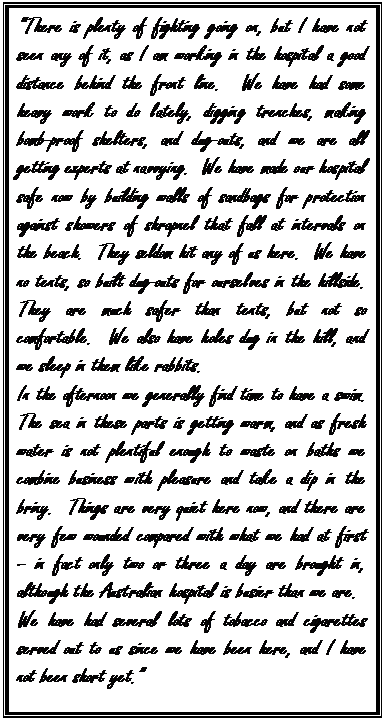
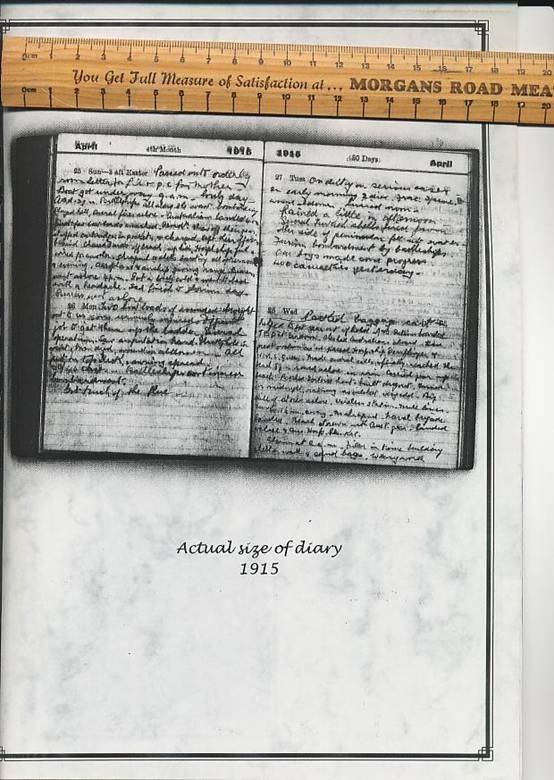
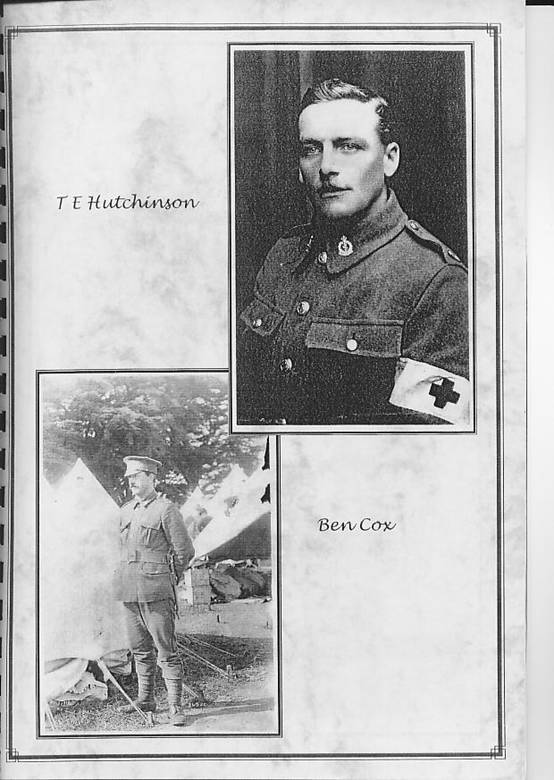
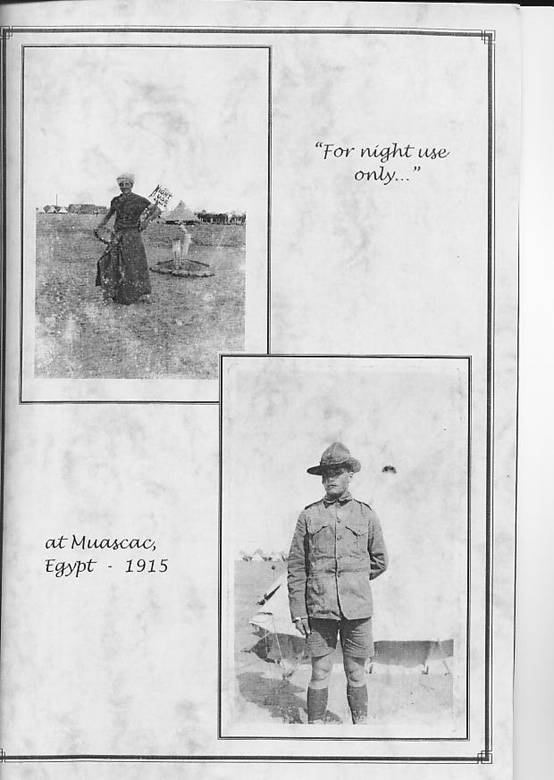
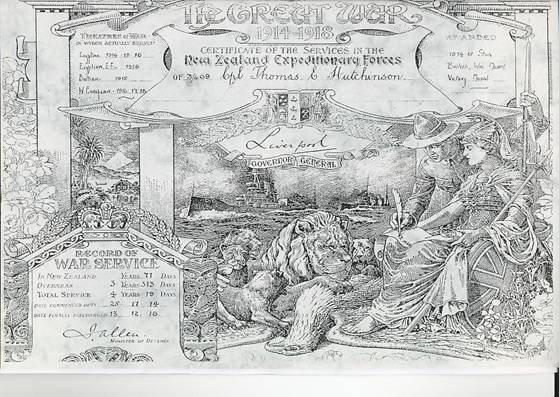
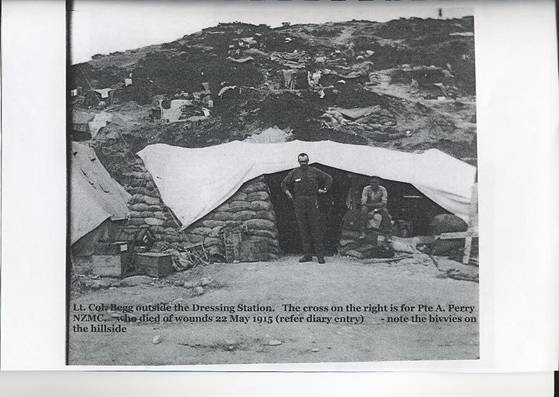
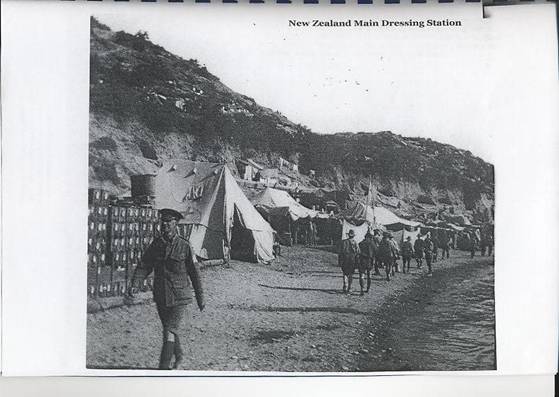
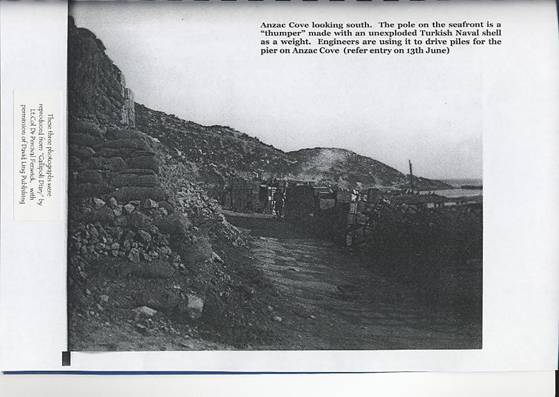
Download a PDF Copy (1.20 MB)